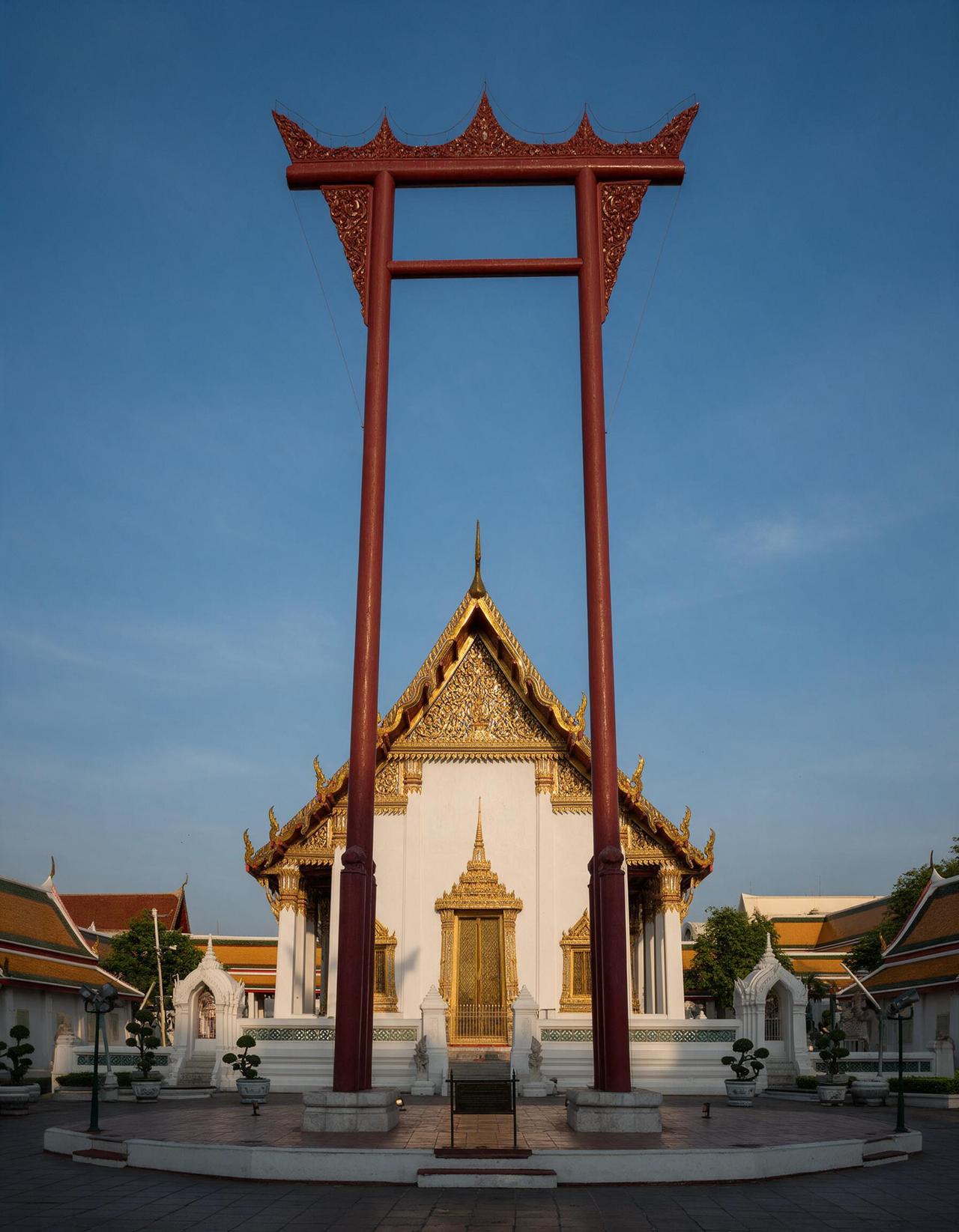
Wat Suthat: Bangkok’s Giant Swing Temple
Wat Suthat Thepwararam, one of Bangkok’s six first-class royal temples, is an architectural masterpiece that often gets overlooked by visitors focused on the Grand Palace and Wat Pho. Yet this temple, commissioned by King Rama I in 1807 and completed by King Rama III in 1847, contains some of the most exquisite murals and Buddha images in Thailand. Its most famous feature, however, is not inside the temple at all: the towering red Giant Swing (Sao Ching Cha) that stands at the entrance, one of Bangkok’s most iconic and photographed structures. For visitors willing to slow down and explore, Wat Suthat offers a deeply rewarding temple experience.
The Giant Swing: A Daring Tradition
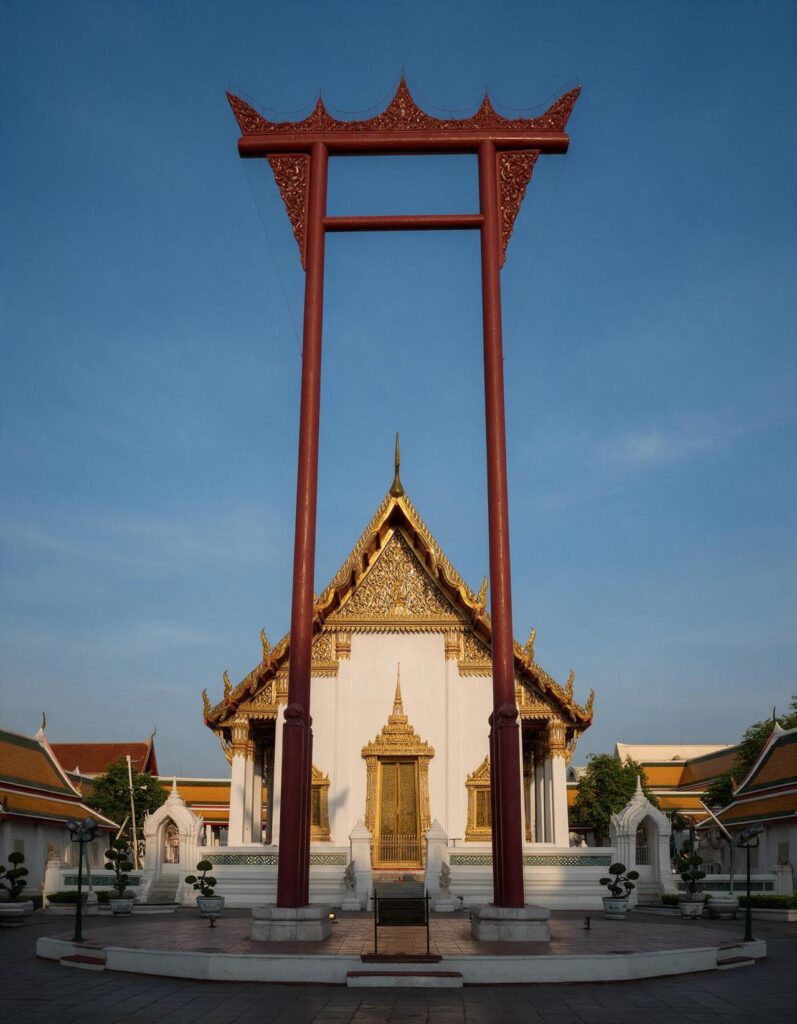
The Giant Swing, standing 21 metres tall and painted a deep red, is one of Bangkok’s most recognisable landmarks. It was originally constructed in 1784 to be used in the Swing Ceremony (Triyampavai-Tripavai), a Brahmin ceremony celebrating the creation of the world. During the ceremony, young men would swing in ever-higher arcs, attempting to grab a bag of gold coins tied to a pole with their teeth. The ceremony was extremely dangerous, with fatalities common, and it was finally abolished in 1935. The current structure is a 2006 reconstruction, as the original teak swing had deteriorated beyond repair. The swing is no longer used, but it remains a powerful symbol of Bangkok’s history and a stunning architectural element in its own right.
Inside the Temple: Murals and Bronze Buddha
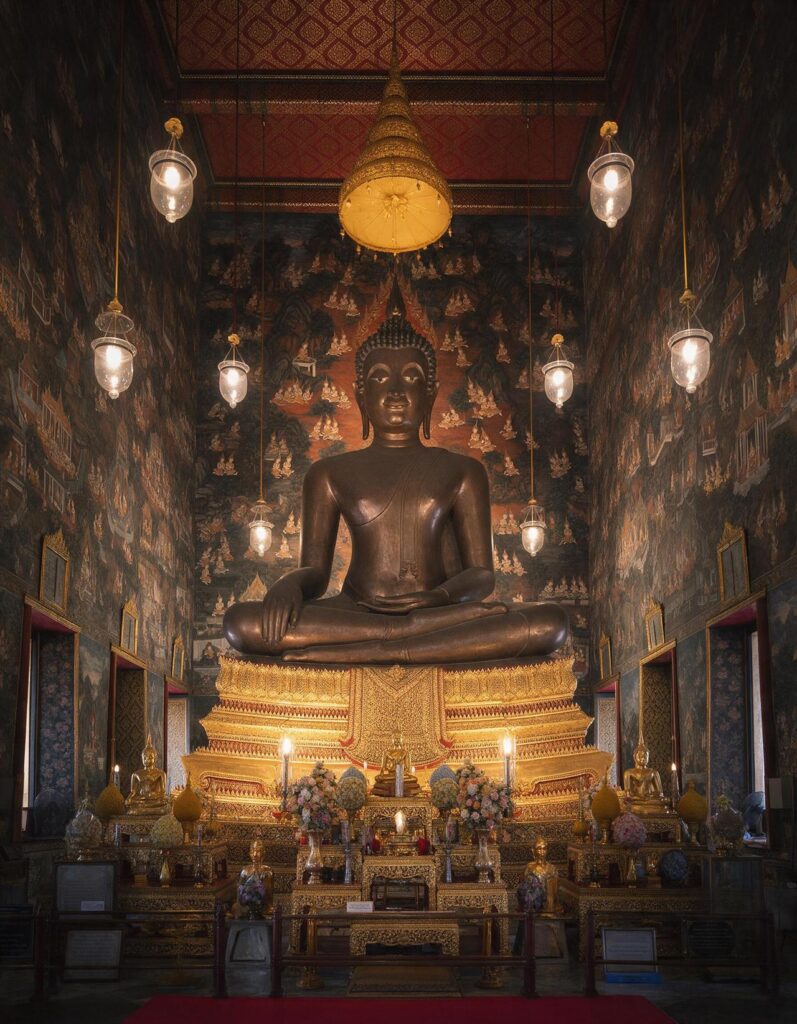
Inside Wat Suthat’s main vihara sits one of the largest surviving Sukhothai-era bronze Buddha images, Phra Sri Sakyamuni, which was transported from Sukhothai to Bangkok in the early 19th century, a journey of over 400 kilometres that took years to accomplish. The image is 8 metres tall and is considered one of the finest bronze castings in Thailand. The walls of the vihara are covered in murals dating from the reign of King Rama III, depicting scenes from the life of the Buddha, the Trai Bhumikatha (the Buddhist cosmology), and Jataka tales. These murals are considered some of the finest surviving examples of Rattanakosin-era painting and are a major reason why Wat Suthat is classified as a first-class royal temple.
Practical Tips for Visitors
- Entrance fee: 100 THB ($3 USD) for foreigners. The temple is open daily from 8:30 AM to 4:30 PM.
- Getting there: Walk from MRT Sam Yot or BTS National Stadium (15-20 minutes each). The Giant Swing is on Bamrung Muang Road, near Democracy Monument.
- Best time to visit: Morning light is best for viewing the murals, which are on the walls of the vihara. The temple is generally uncrowded, making it a peaceful visit at any time.
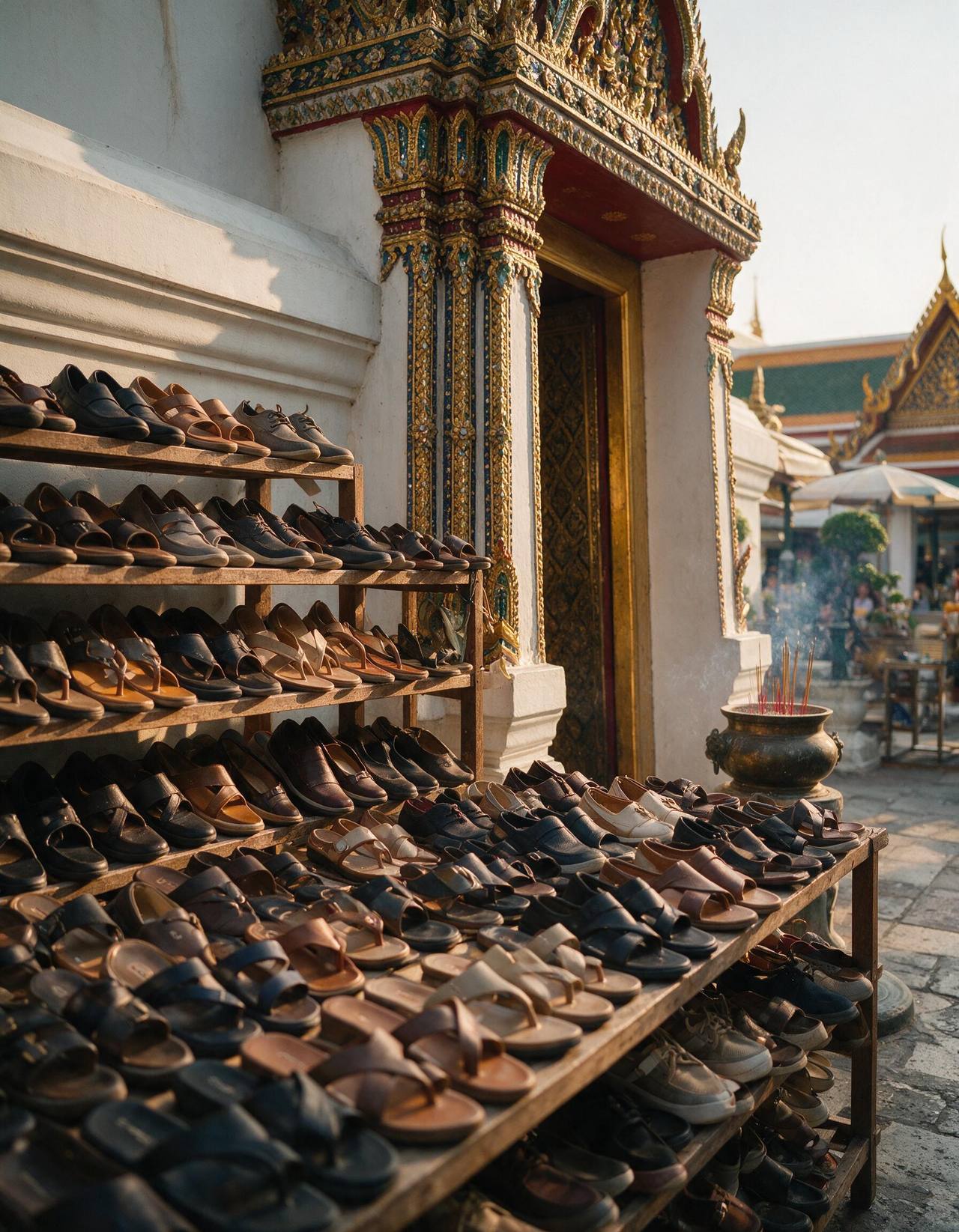
- Dress code: Shoulders and knees must be covered. Sarongs are available at the entrance.
- Don’t miss: The surrounding area, Bamrung Muang Road, is Bangkok’s oldest religious supply street, selling Buddhist amulets, monk’s alms bowls, and temple decorations. It is a fascinating walk after visiting the temple.
One of the most remarkable features of Wat Suthat is its collection of Chinese stone figures. During the reign of King Rama III, ballast stones from Chinese trading ships were brought to Bangkok and carved into figures of soldiers, horses, and mythological creatures. These were used as ballast for the journey and then repurposed as decorative elements for the temple. They line the cloisters and bases of the temple, and each one is unique. Look closely at the faces of the stone soldiers; they reflect a blend of Chinese and Thai artistic sensibilities that is unique to the Rattanakosin period.
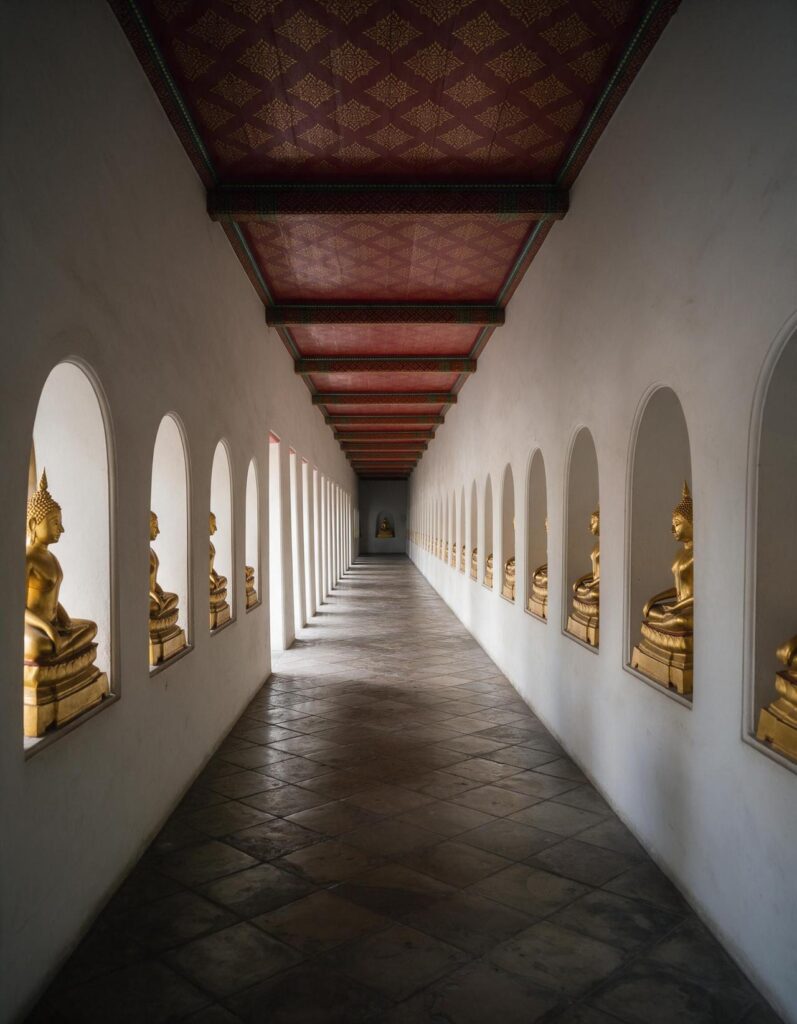
The cloister surrounding the temple contains over 150 Buddha images, each one slightly different, representing various regional styles from across Thailand. This gallery is one of the most peaceful spaces in Bangkok; the repetitive rows of golden Buddha figures, the filtered light, and the near-total absence of other visitors create an atmosphere of deep meditation. Many Thai visitors come here specifically to walk the cloister as a form of walking meditation, making merit by lighting incense and making offerings at each Buddha image. This is a practice you are welcome to observe, and even participate in, with respect.
Wat Suthat and the Giant Swing represent a side of Bangkok that is increasingly rare: the quiet, unhurried, deeply historical city that existed before mass tourism and skyscrapers. The temple rewards patience and attention: the more you look, the more you see, from the tiny details in the murals to the individual expressions on the stone soldiers. Combined with a walk through Bamrung Muang Road, where shops have been selling religious supplies for over a century, a visit here offers a glimpse into a Bangkok that most tourists never experience. It is, in many ways, the most authentic temple experience in the city.