White Temple (Wat Rong Khun): Chiang Rai’s Surreal Art Temple
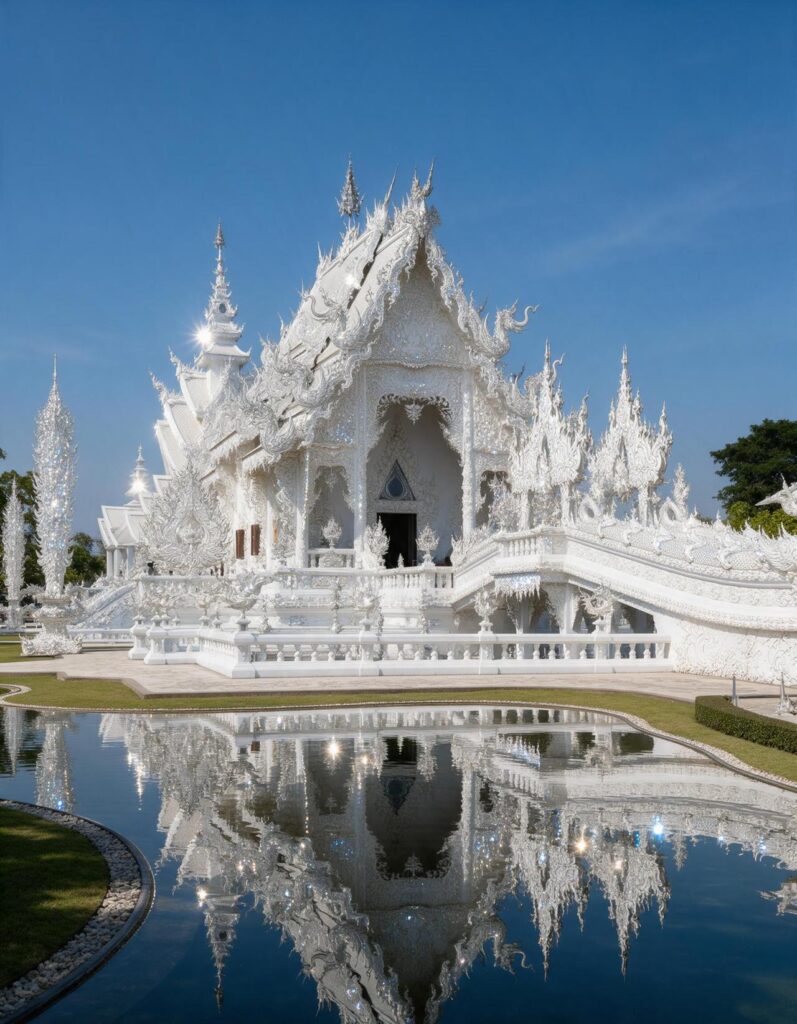
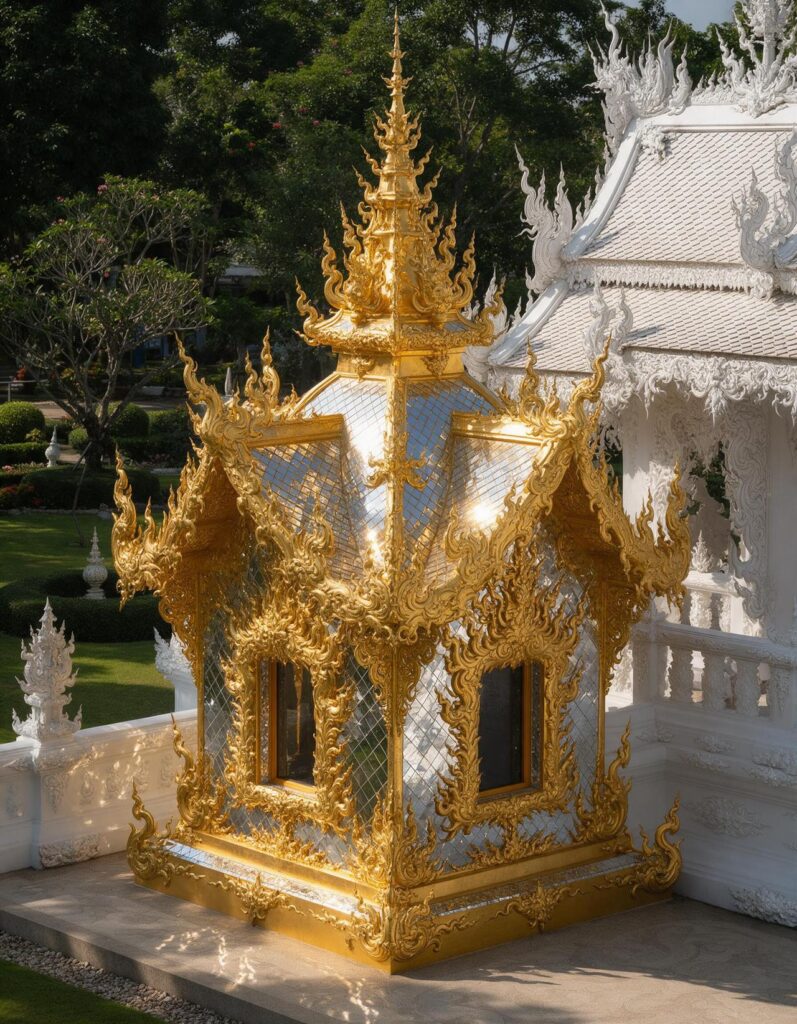
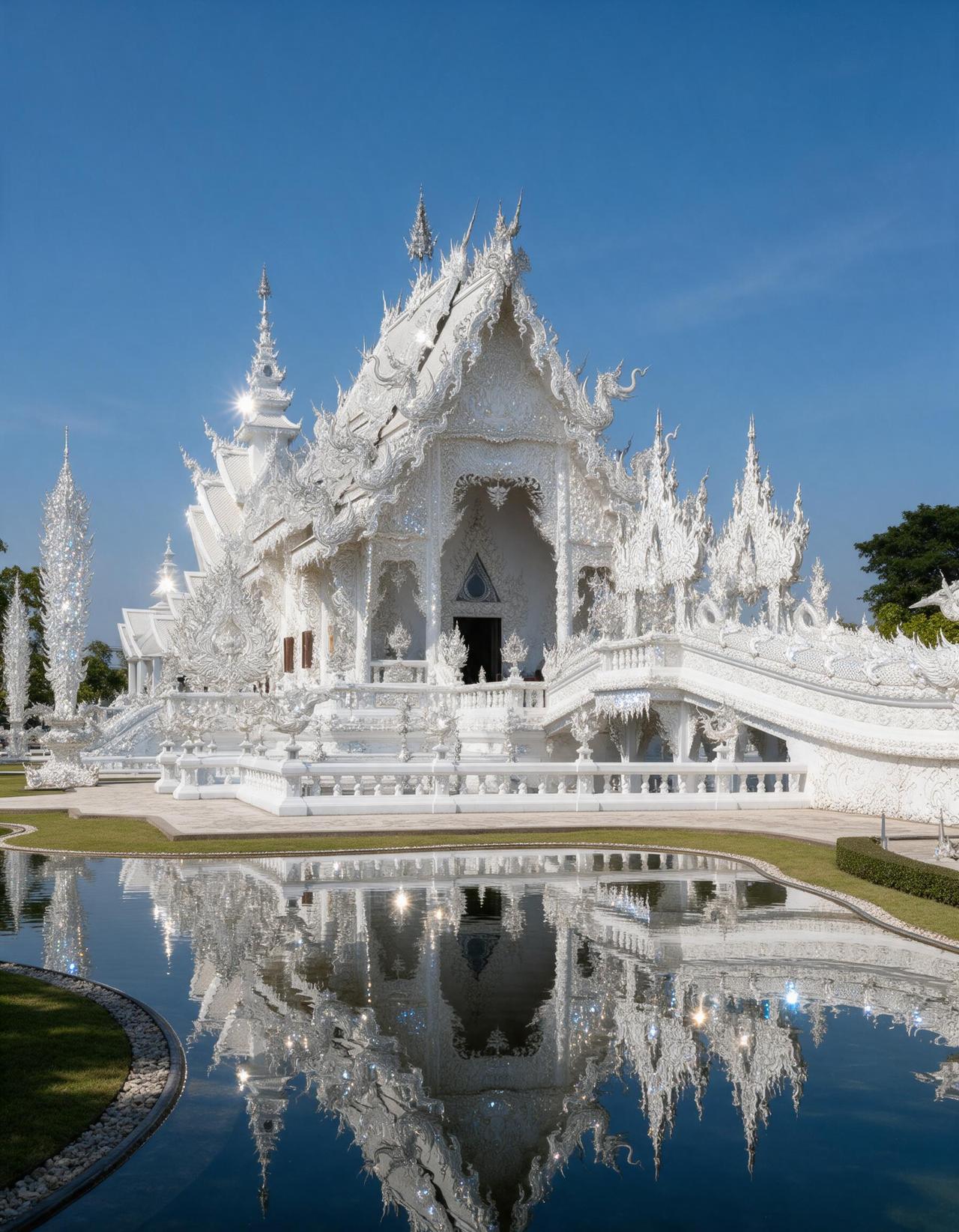
Wat Rong Khun, universally known as the White Temple, is one of the most extraordinary and unconventional Buddhist sites in Thailand. Located just outside Chiang Rai city, it is not a historical temple but a contemporary art project begun in 1997 by the visionary Thai artist Chalermchai Kositpipat. Unlike the gold-leaf-covered temples that dominate Thai religious architecture, the White Temple is pure white, adorned with fragments of glass that make it sparkle in sunlight as if carved from ice. It is simultaneously a Buddhist temple, an art installation, and a meditation on the human condition, and it has become one of the most photographed sites in Thailand.
The Vision: One Artist’s Obsession
Chalermchai Kositpipat, one of Thailand’s most celebrated contemporary artists, funded the entire project from his own resources, refusing corporate sponsorship to maintain complete artistic control. He has stated that the temple is an offering to Lord Buddha and a gift to his country, and he intends to work on it until his death. The white colour represents the purity of the Buddha, while the embedded glass symbolises his wisdom. The result is a structure that changes character throughout the day, from a blindingly bright spectacle at noon to a softly luminous presence at dawn and dusk. Chalermchai has said he wants the temple to last a thousand years, and the construction is designed accordingly.
Symbolism: From Hell to Enlightenment
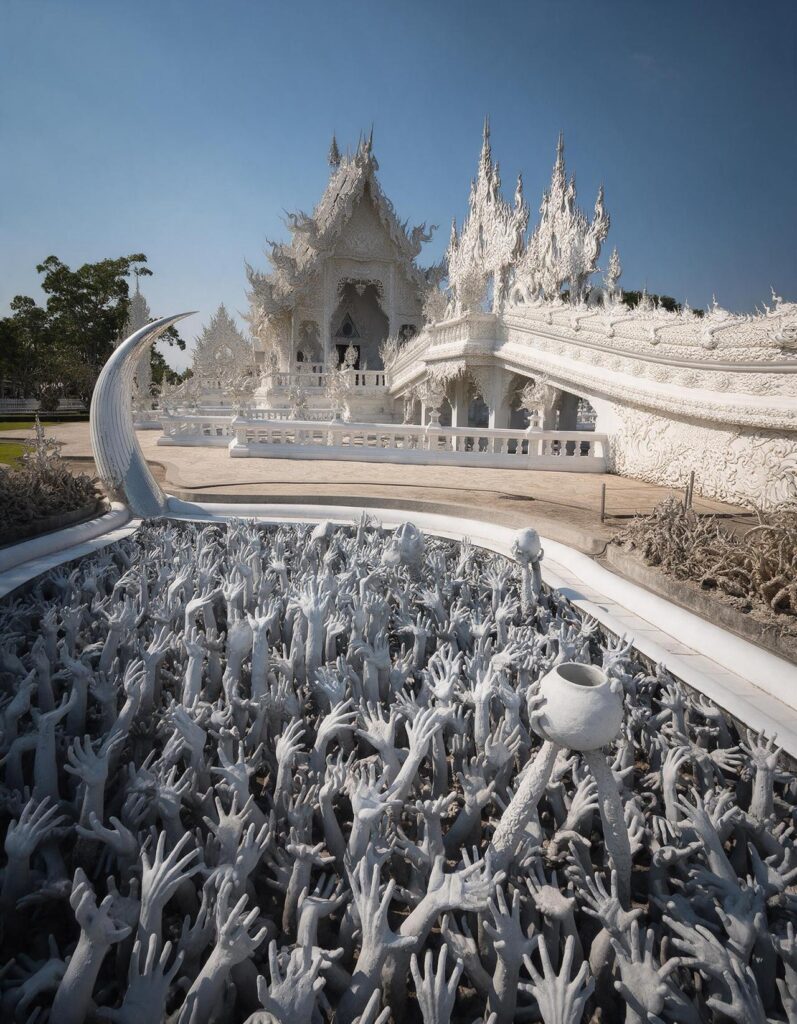
Every element of the White Temple is loaded with symbolism. To enter the main building (ubosot), visitors must cross the Bridge of the Cycle of Rebirth, which passes over a pit of reaching hands and ghastly faces representing suffering in hell. This is a visual representation of the Buddhist teaching that one must overcome desire and suffering to reach enlightenment. At the entrance to the bridge are fearsome guardian figures. Inside the ubosot, the murals are even more surprising: traditional Buddhist iconography sits alongside pop culture references including Superman, Batman, Spider-Man, the Matrix, UFOs, and even images of the World Trade Centre attacks. The message is that the modern world, with all its distractions and idols, is the new path that must be navigated toward spiritual awakening.
Practical Tips for Visitors
- Entrance fee: 100 THB ($3 USD) for foreigners, free for Thai nationals. The temple is open daily from 8:00 AM to 5:00 PM.
- Getting there: 13 kilometres south of Chiang Rai city. Take a local bus from the old bus station (20 THB, 30 minutes) or hire a tuk-tuk (200-300 THB round trip).
- Best time to visit: Arrive at 8:00 AM to avoid crowds and get the best photos. Alternatively, visit late afternoon when the light is softer and the crowds thin out.
- Photography rules: Photography is permitted outside but not inside the main ubosot. Respect this rule, as the interior murals are the artist’s copyrighted work.
- Combine with: The Blue Temple (Wat Rong Suea Ten) and the Black House (Baan Dam Museum) are also in Chiang Rai and make for a full day of artistic exploration. Both are free or minimal entry.
The grounds of the White Temple extend well beyond the main structure. There are several other buildings and installations, including a golden building that represents the human mind’s preoccupation with material wealth (visitors can toss coins into its grounds for good fortune). There are also sculptural gardens, a wish-well with a mirrored ceiling, and a gallery where Chalermchai’s paintings are displayed. The restrooms, housed in an ornate gold building, are said to be the most beautiful public toilets in the world. Allow at least two hours to explore the entire site thoroughly, and take time to read about the symbolism of each element.
In 2014, a magnitude 6.3 earthquake struck Chiang Rai and caused significant damage to the White Temple, cracking the main spire and damaging several structures. Chalermchai initially considered abandoning the project, but after an outpouring of support from the public and the art community, he decided to repair and continue. The restoration took over a year, and the temple reopened with even more elaborate details. This resilience is part of what makes the White Temple a living artwork, it is not a static monument but an evolving creation that responds to the forces of nature and the passage of time.
The White Temple challenges every expectation of what a Thai temple should be. It is provocative, contemporary, and deeply personal, the expression of one artist’s lifelong devotion to both Buddhist philosophy and artistic creation. Whether you find it profound or perplexing, there is no denying that it is one of the most unique religious sites in the world. Chalermchai Kositpipat has created something that transcends the boundaries between art, architecture, and spirituality, and visiting it is an essential part of any journey through Northern Thailand.