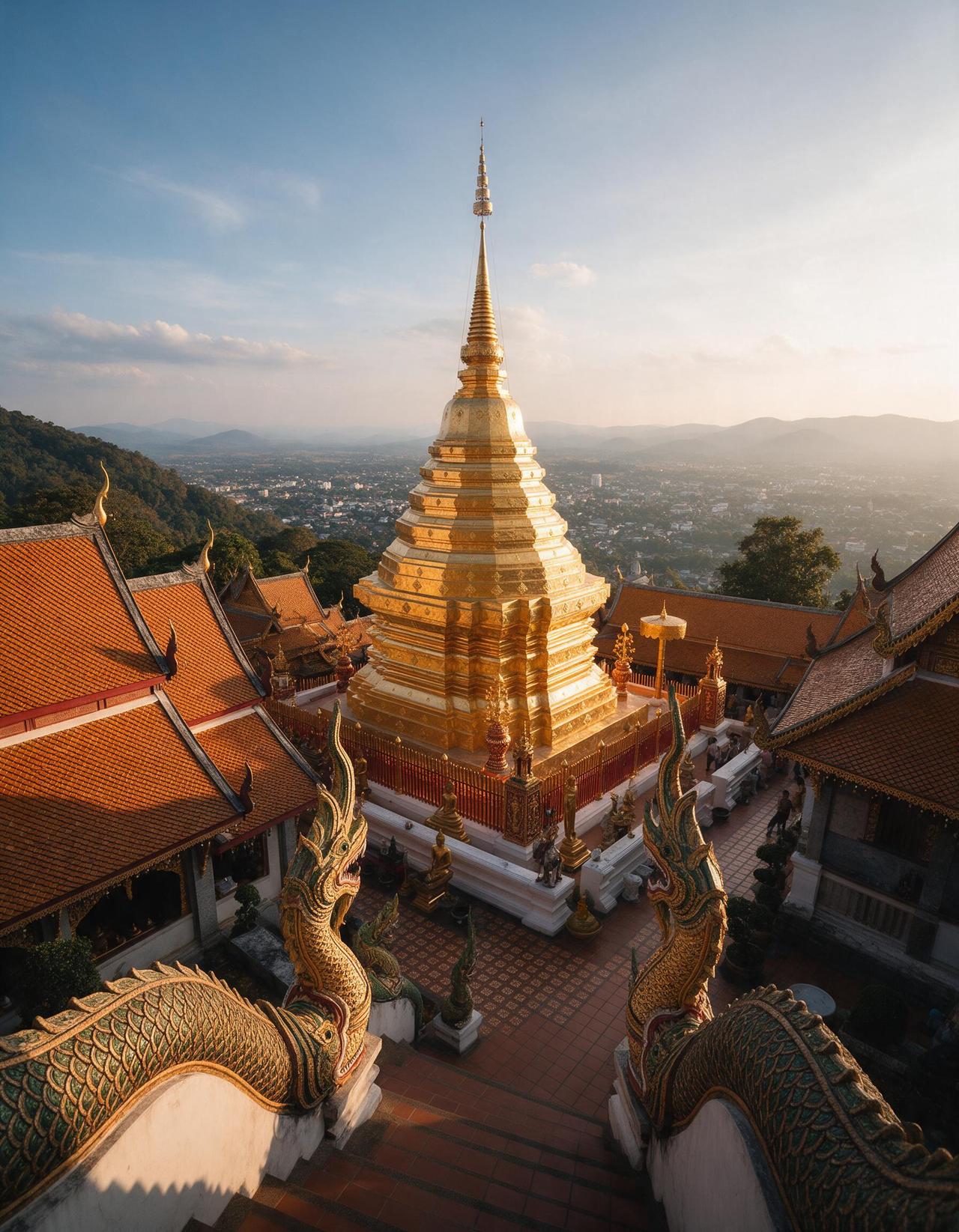
Wat Phra That Doi Suthep: Chiang Mai’s Sacred Mountaintop Temple
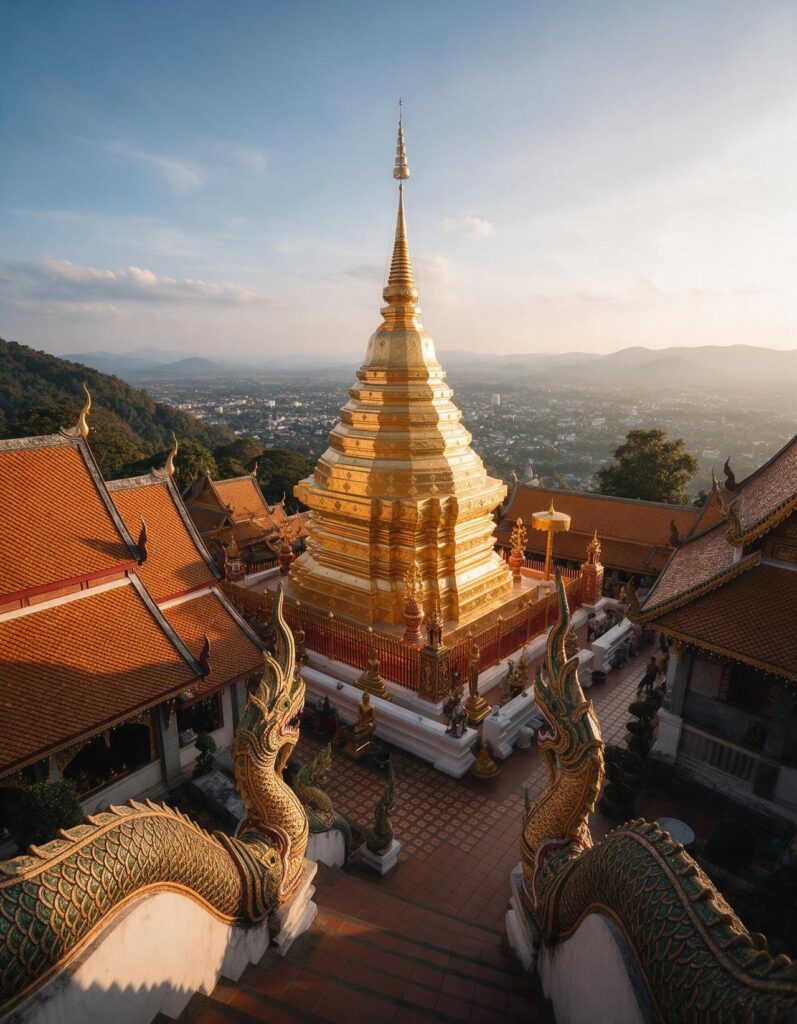
Wat Phra That Doi Suthep is not just a temple; it is the spiritual heart of northern Thailand. Perched on the shoulder of Doi Suthep mountain at an elevation of 1,073 metres, this temple is one of the most sacred sites in the country, drawing pilgrims from across Thailand who come to pay respects to a relic of the Buddha enshrined in its golden chedi. The temple’s location, overlooking the city of Chiang Mai from above, gives it an almost mythical quality, and the approach, whether by the famous 306-step naga staircase or the funicular railway, is a journey in itself. For visitors to Chiang Mai, a visit to Doi Suthep is a rite of passage, and for many Thais, it is a pilgrimage they aspire to make at least once in their lifetime.
The Legend of the White Elephant
According to legend, the temple was founded in 1383 when a monk named Sumana placed a relic of the Buddha on the back of a white elephant and released it into the jungle. The elephant climbed Doi Suthep mountain, trumpeted three times, and then collapsed and died at the spot where the temple now stands. King Keu Naone interpreted this as a sign and ordered the construction of the temple at that exact location. The white elephant has become the symbol of the temple, and statues of elephants can be found throughout the complex. Whether or not one believes the legend, the temple’s mountaintop location and the sense of serenity that pervades the site make it easy to understand why this spot was chosen for such an important religious monument.
The Golden Chedi and Temple Complex
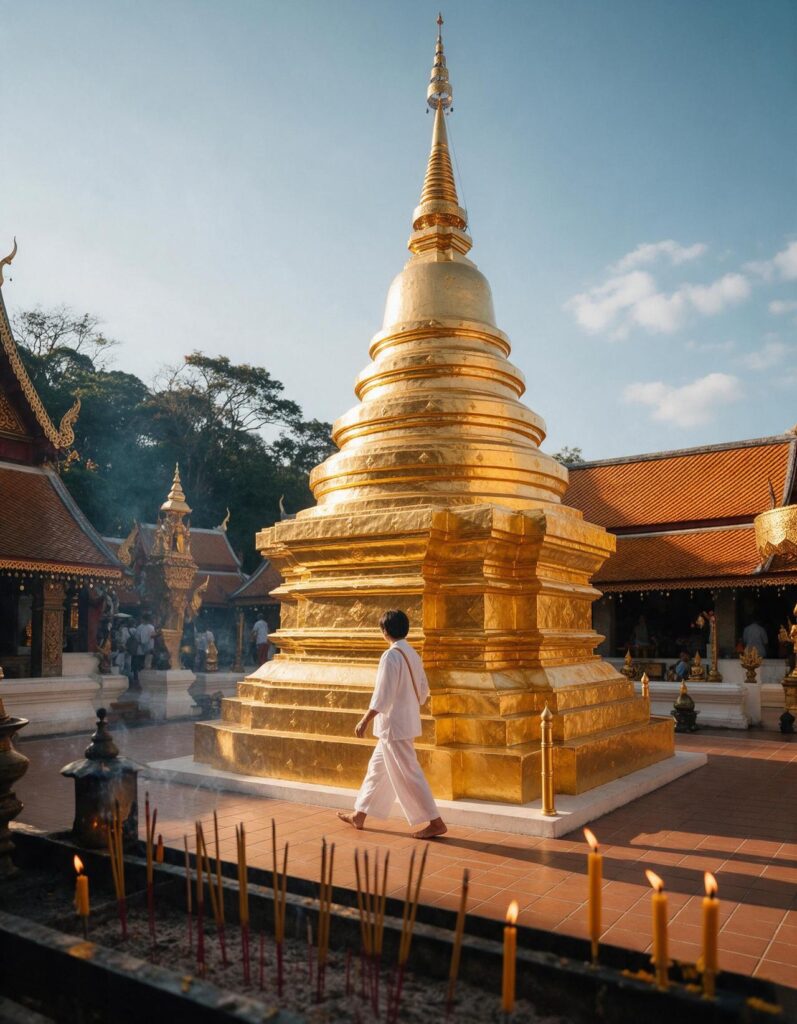
The centrepiece of the temple is the golden chedi, a conical structure covered in gold leaf that houses the Buddha relic. The chedi is surrounded by a terrace with four perimeter cloisters containing Buddha images, bells, and shrines. Visitors walk clockwise around the chedi, a practice known as circumambulation that is common in Buddhist temples throughout Asia. The terrace also offers spectacular views of Chiang Mai, especially at sunrise and sunset. The inner cloister contains a museum with religious artefacts, and there are several smaller shrines and pavilions throughout the complex. The temple’s architecture is a blend of Lanna, Mon, and Sri Lankan styles, reflecting the diverse cultural influences that have shaped northern Thailand over the centuries.
The Naga Staircase and the Climb
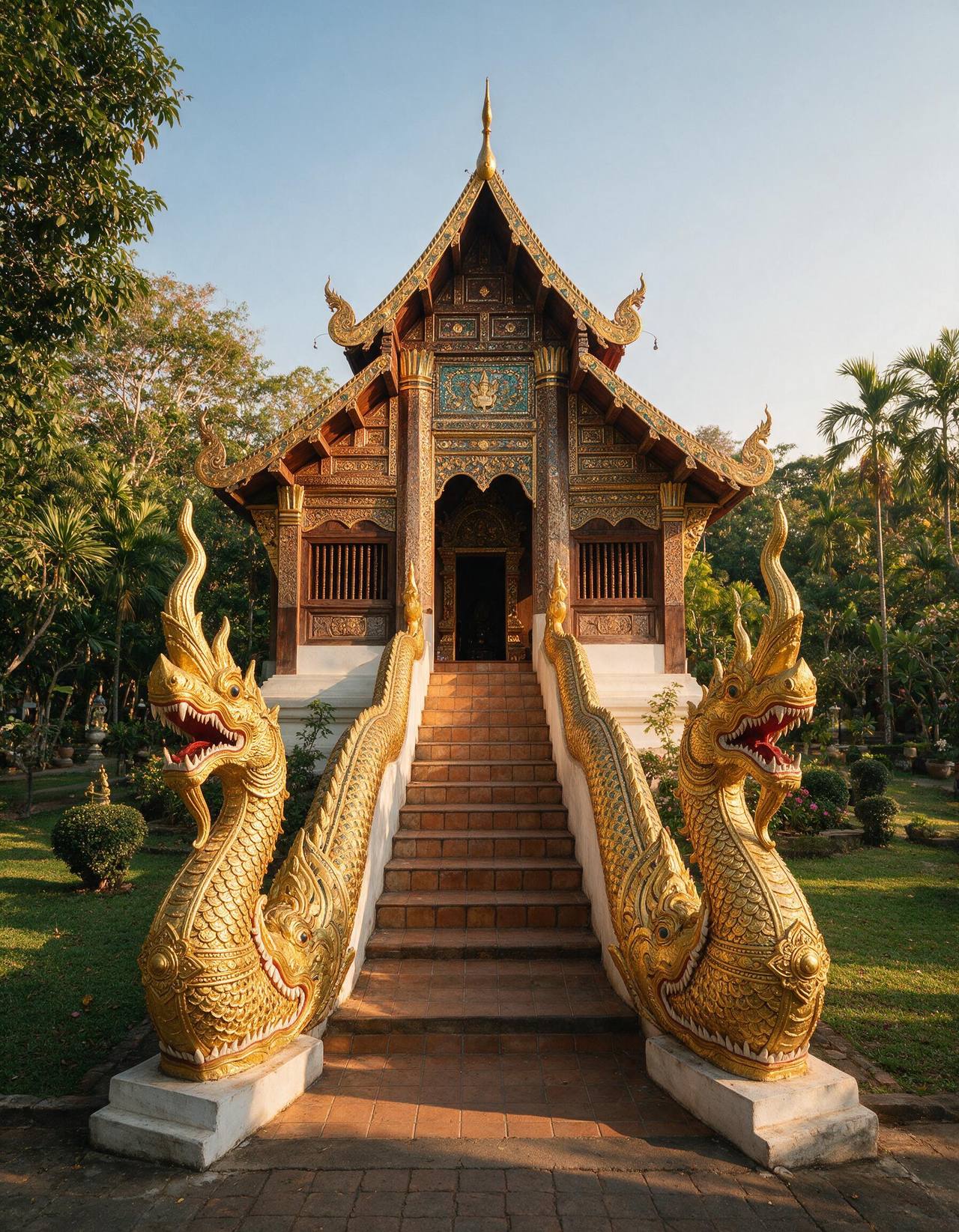
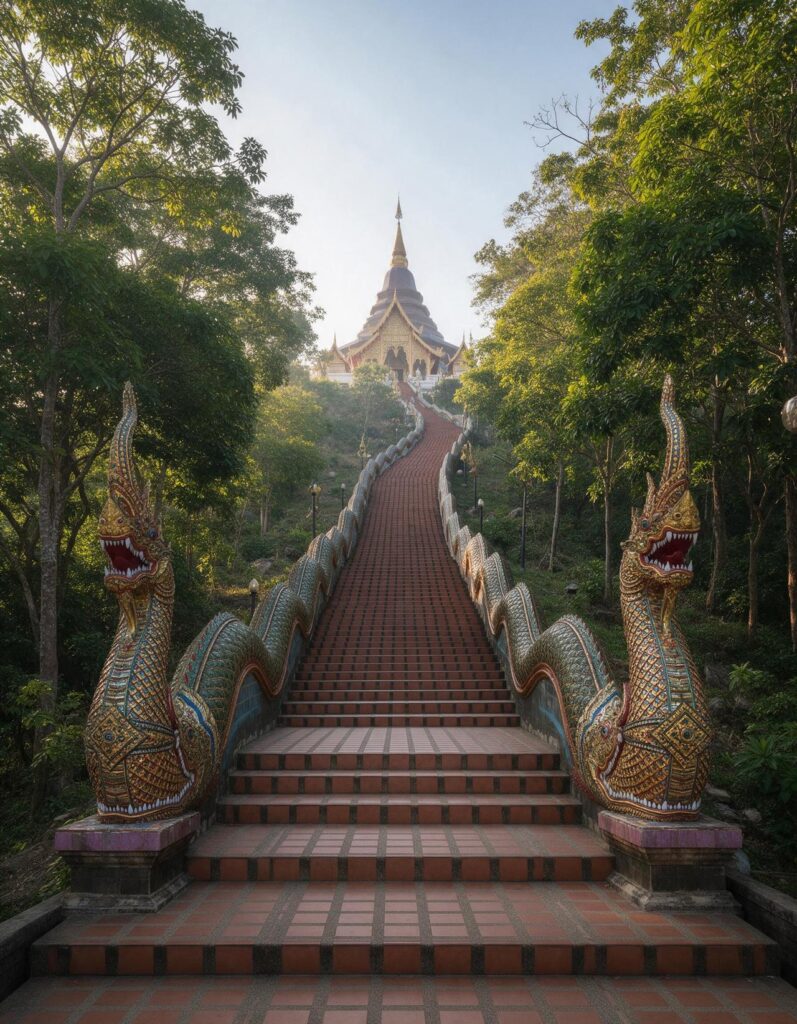
The most iconic feature of Wat Doi Suthep, after the chedi itself, is the 306-step staircase that leads from the car park to the temple. The staircase is flanked by a pair of jewelled naga (serpent) balustrades, their bodies forming the handrails as they wind their way up the mountain. The climb takes about 10-15 minutes for most people and is a popular form of merit-making for Thai pilgrims. For those who cannot or do not wish to climb, a funicular railway runs alongside the stairs for a small fee. The best time to climb is early in the morning, when the air is cool and the steps are not crowded. At the top of the stairs, a ticket booth collects the entrance fee and lends sarongs to visitors who are not dressed appropriately.
Practical Tips for Visitors
- Getting there: The temple is about 15 km from Chiang Mai’s Old City. You can reach it by songthaew (shared red truck) from the base of Huay Kaew Road, by private car or scooter, or by organised tour. The drive takes about 30-40 minutes up a winding mountain road.
- Entrance fee: 30 THB for foreigners. There is an additional 20 THB for the funicular if you do not want to climb the stairs.
- Dress code: Cover your shoulders and knees. Sarongs are available to borrow at the top, but it is best to dress appropriately from the start.
- Best time: Sunrise (around 6 AM) offers the clearest views and the fewest crowds. Sunset is also beautiful but more crowded. Avoid weekends and Thai public holidays when the temple is very busy.
- What to bring: Water, sunscreen, a hat, and some small cash for offerings and donations. Do not bring drones, as they are not permitted.
Beyond the temple itself, Doi Suthep mountain offers several other attractions worth exploring. The Bhubing Palace, the winter residence of the Thai royal family, is a short drive further up the mountain and features beautiful gardens that are open to the public when the royal family is not in residence. The Hmong village of Doi Pui, further up the mountain, offers a glimpse into the life of one of Thailand’s hill tribe communities, with traditional houses, a small museum, and flower gardens. For hikers, the Monk’s Trail, a forest path that leads from the base of the mountain to the temple, is a beautiful and peaceful trek that takes about 2-3 hours and passes through lush jungle and several small waterfalls.