Sanctuary of Truth: Pattaya’s Wooden Wonder
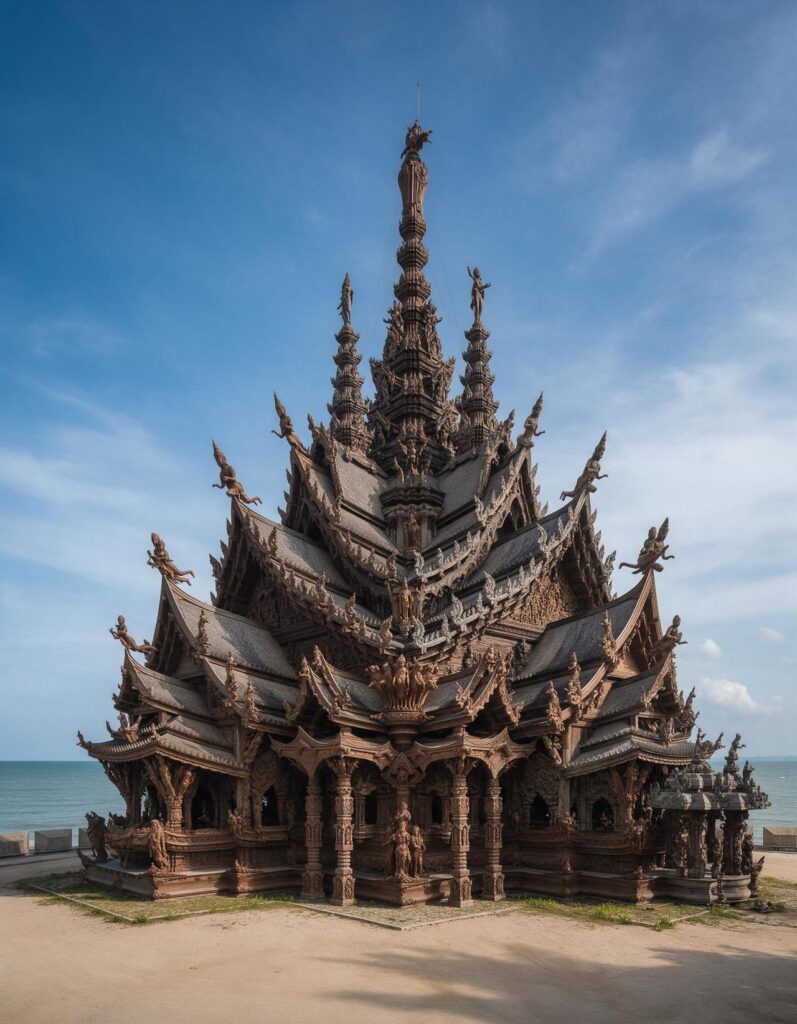
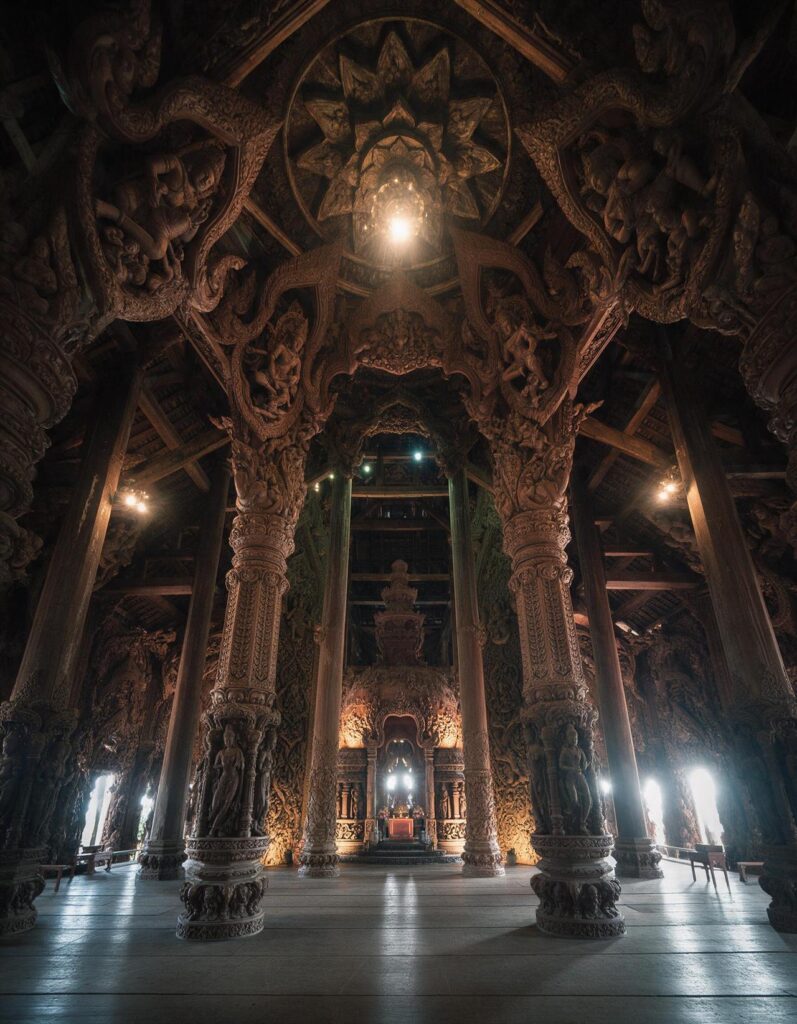
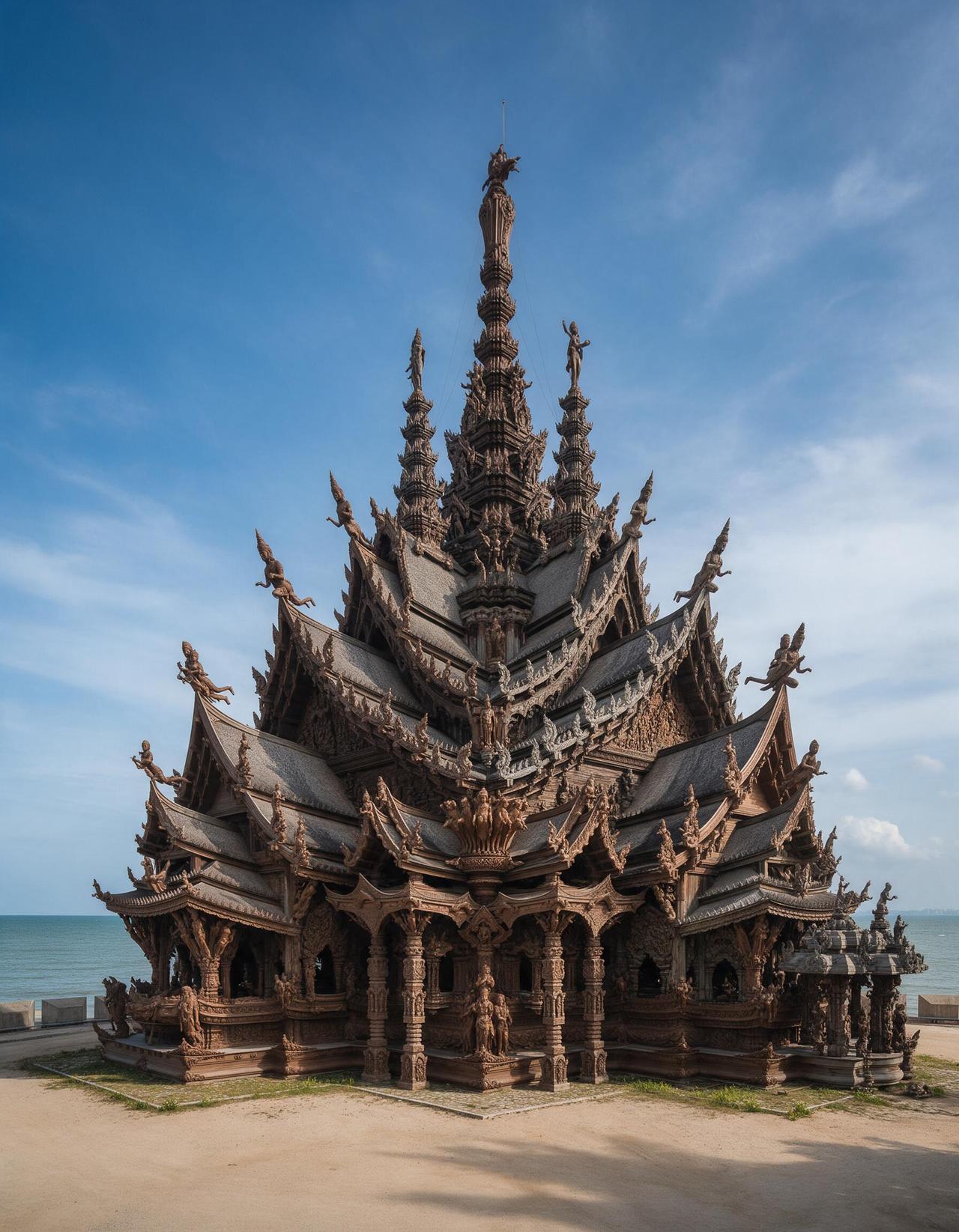
The Sanctuary of Truth (Prasat Sut Ja-Tum) is one of the most extraordinary and ambitious construction projects in Thailand. Rising 105 metres above the coastline at Laem Ratchawet, north of Pattaya, this colossal temple is built entirely of wood, without a single metal nail, and every square centimetre of its exterior and interior is covered in hand-carved mythological figures. The project was conceived by Lek Viriyaphant, a Thai businessman and philanthropist who also created the Ancient City (Mueang Boran) and the Erawan Museum in Samut Prakan. Construction began in 1981 and is still ongoing, with a team of artisans working on site every day. The sanctuary is not a Buddhist temple in the traditional sense but rather a philosophical monument dedicated to the idea that human civilisation is sustained by seven core truths: religion, philosophy, art, culture, and the relationship between humans and the universe.
The Architecture: All Wood, All Hand-Carved
The Sanctuary of Truth is constructed entirely from different types of wood, including teak, redwood, and other hardwoods. The building is 100 metres tall and 100 metres wide, with four wings representing different cultural traditions: Thai, Khmer, Chinese, and Indian. Each wing is topped with a soaring spire, and the central spire rises to 105 metres. Every surface, from the columns to the ceiling to the roof, is covered with intricate carvings that depict scenes from Hindu and Buddhist mythology, including the Ramayana, the Mahabharata, and traditional Thai folk tales. The carvings are so detailed that a single column can take months to complete. The building was constructed using traditional joinery techniques, with wooden pegs and interlocking joints instead of nails, a method that allows the structure to flex and breathe with the climate.
The Philosophy: Seven Truths
According to Lek Viriyaphant’s vision, the sanctuary represents the idea that human civilisation has been sustained and enriched by seven core truths. These include the recognition that humans are part of a larger cosmic order, that religion provides moral guidance, that art and culture are expressions of human creativity, and that the relationship between parents and children, and between society and the individual, are fundamental to social cohesion. The carvings throughout the building illustrate these themes, with figures representing the sun, the moon, the earth, the stars, and mythological beings from different cultures. The result is a syncretic monument that draws on Buddhist, Hindu, Taoist, and Christian iconography, creating a unique visual language that reflects the diversity of Asian spiritual traditions.
Visiting the Sanctuary
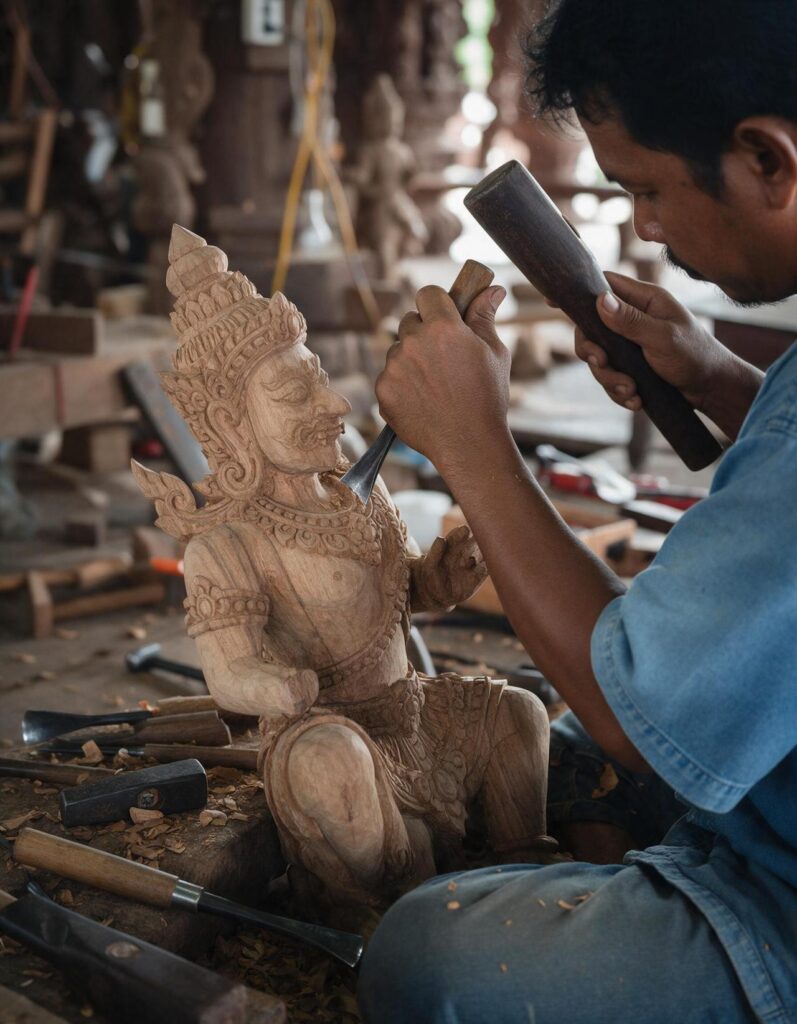
A visit to the Sanctuary of Truth typically takes 1-2 hours. The entrance fee includes a guided tour, which is highly recommended as the carvings and their meanings are not self-evident. Visitors are required to wear hard hats inside the building, as construction is ongoing and there is a risk of falling debris. The tour takes visitors through the four wings and up to the central hall, where the scale of the building and the detail of the carvings are most impressive. Along the way, visitors can watch artisans at work, carving new sections and restoring existing ones. The site also offers cultural performances, including traditional Thai dance and a martial arts demonstration, and visitors can take a ride on a horse-drawn carriage or a long-tail boat around the property.
Practical Tips for Visitors
- Getting there: The sanctuary is in Naklua, about 15 minutes north of central Pattaya. Taxis, Grab cars, and songthaews are available from Pattaya. From Bangkok, it is about a 2-hour drive.
- Entrance fee: 500 THB for foreigners, which includes a guided tour. Hard hats are provided and must be worn inside.
- Best time: Visit in the morning (9-11 AM) to avoid the heat and the afternoon tour crowds. The site is open daily from 8 AM to 6 PM.
- Dress code: Dress modestly, as the site is considered a spiritual place. Cover shoulders and knees. Avoid very revealing clothing.
- Photography: Photography is permitted throughout the site. The best exterior shots are from the beach in front of the building, where the full scale of the structure is visible.
The Sanctuary of Truth is a living project that will likely never be truly finished. The tropical climate takes a heavy toll on wood, and sections of the building are constantly being repaired or replaced. This continuous cycle of construction and restoration is, in a sense, part of the monument’s philosophy: it is a testament to the idea that human creativity and spiritual inquiry are ongoing processes, not destinations. Lek Viriyaphant died in 2000, but his vision continues through the foundation that manages the site and the artisans who carry on the work. For visitors, the Sanctuary of Truth offers not just a visual spectacle but a rare opportunity to witness a monumental work of art in progress, to see artisans practising ancient woodworking techniques, and to experience a space that seeks to embody the philosophical and spiritual traditions of Asia in wood and stone.