Best Waterfalls in Thailand Compared: A Local’s Guide to the Most Spectacular Cascades
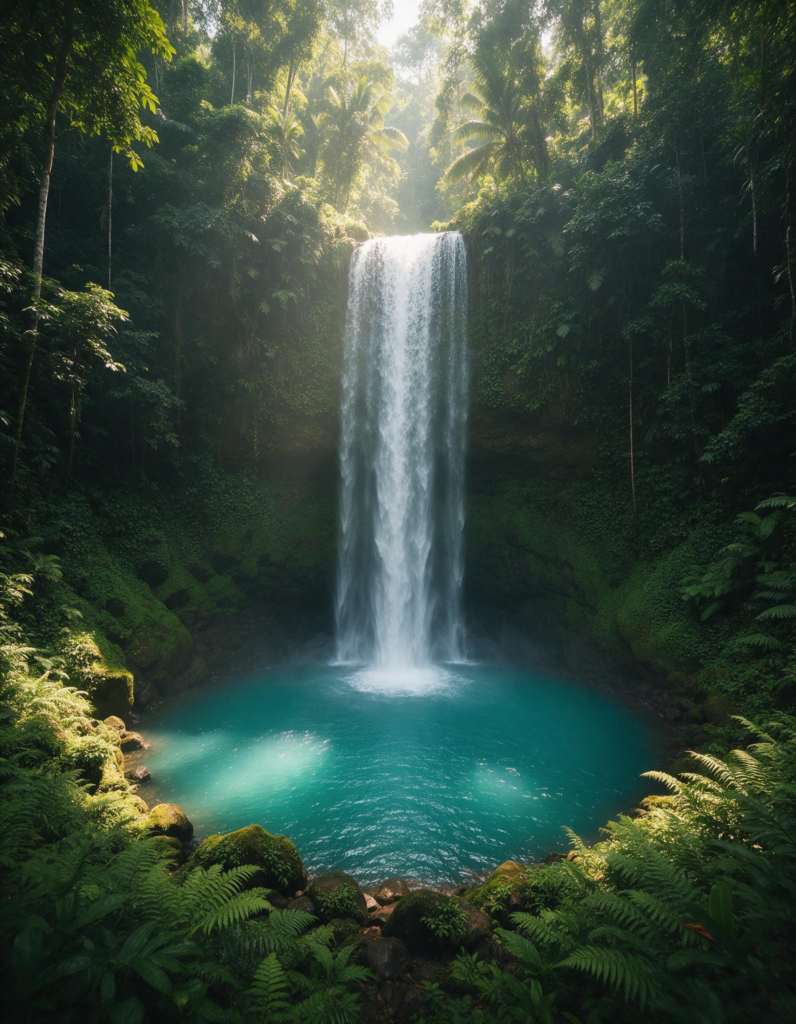
Thailand is home to hundreds of waterfalls, ranging from gentle cascades in jungle streams to thundering giants that shake the ground beneath your feet. As a Thai who has spent a lifetime chasing waterfalls, here is my comparison of the best ones, with practical information on how to visit each.
The Big Comparison: Thailand’s Top 8 Waterfalls
| Waterfall | Location | Height | Best For | Swimming |
|---|---|---|---|---|
| Erawan Falls | Kanchanaburi | 7 tiers, ~1.5 km | Swimming, hiking, families | Yes |
| Haew Narok | Khao Yai NP | 80m, 3 tiers | Power, photography | No |
| Thi Lo Su | Umphang, Tak | ~200m wide | Adventure, scale | Limited |
| Haew Suwat | Khao Yai NP | 25m | Easy access, photos | Dry season |
| Na Muang 1 & 2 | Koh Samui | 18m / 30m | Island combo | Yes (lower pool) |
| Than Sadet | Koh Phangan | Multi-tier | Seclusion, nature | Pools only |
| Pha Suea | Mae Hong Son | 5 tiers | Northern loop road trip | No |
| Maeya | Chiang Rai | 10 tiers | Off-beat, quiet | Yes (some tiers) |
1. Erawan Falls (Kanchanaburi) — Best Overall
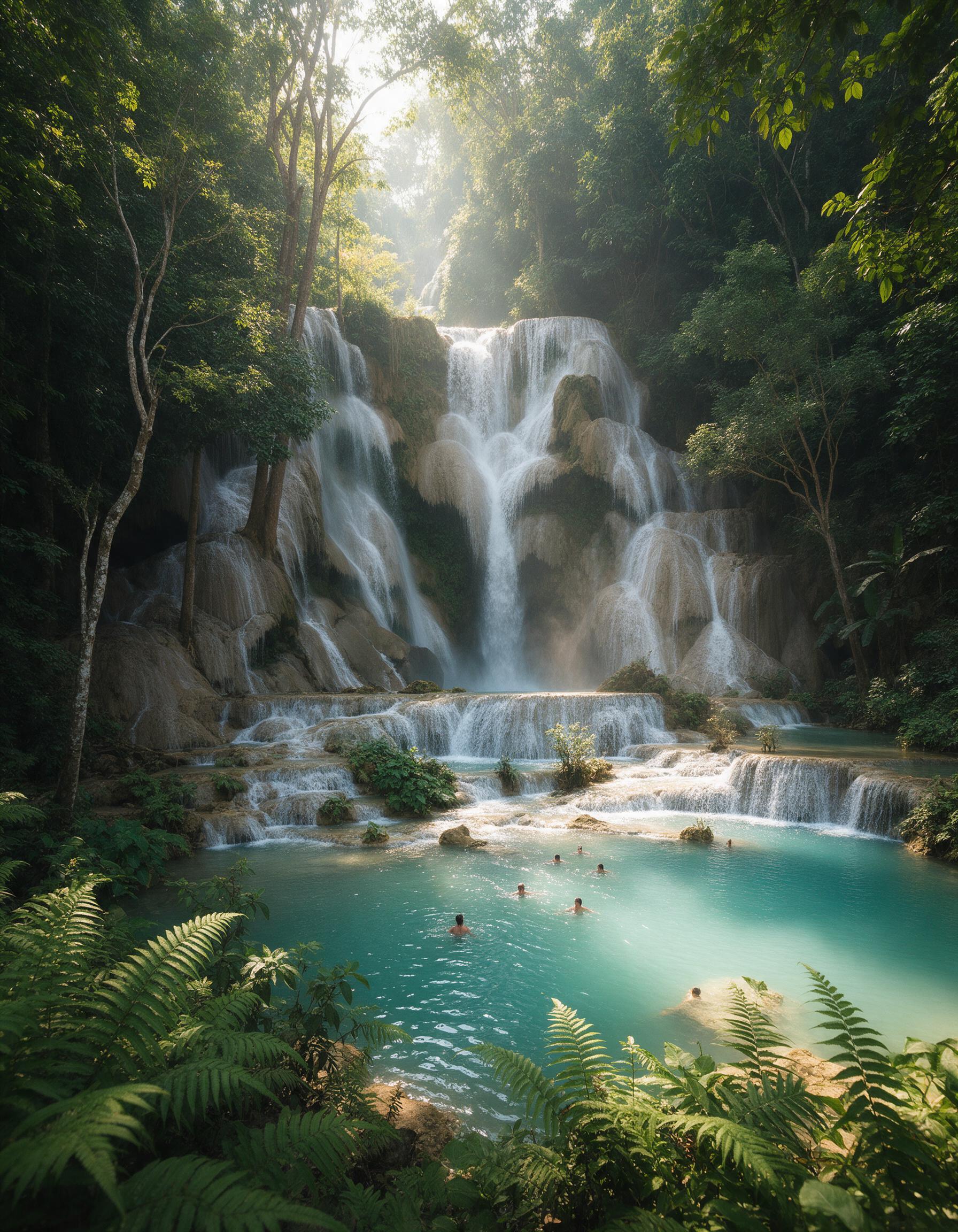
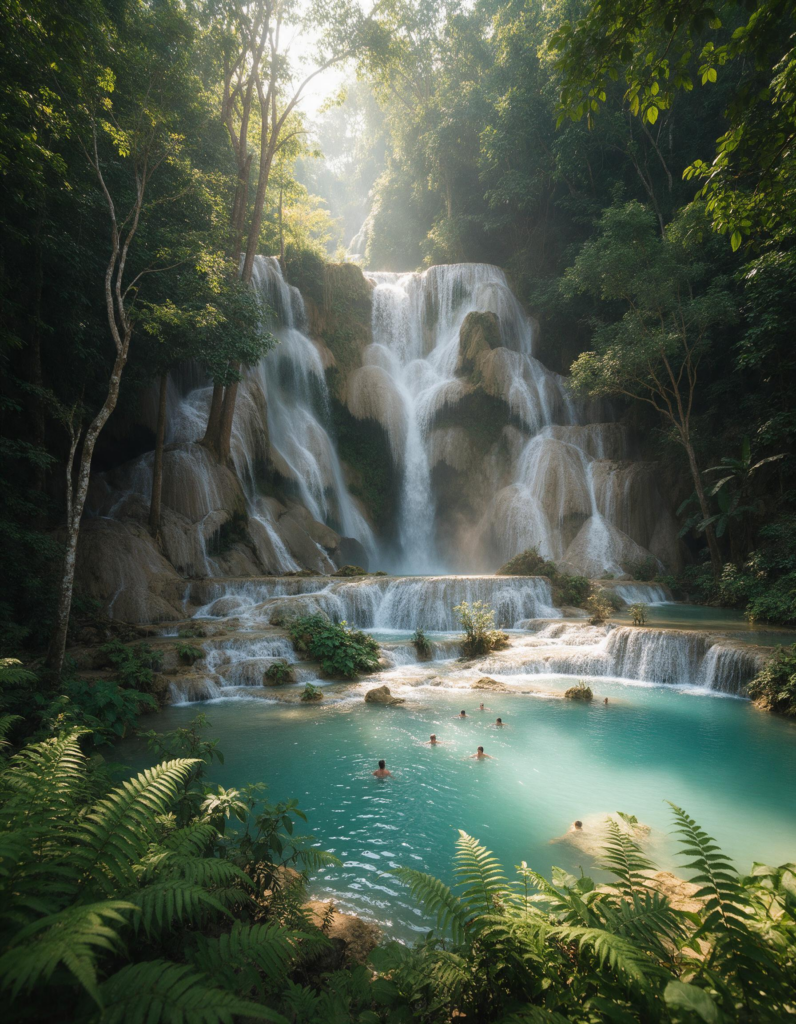
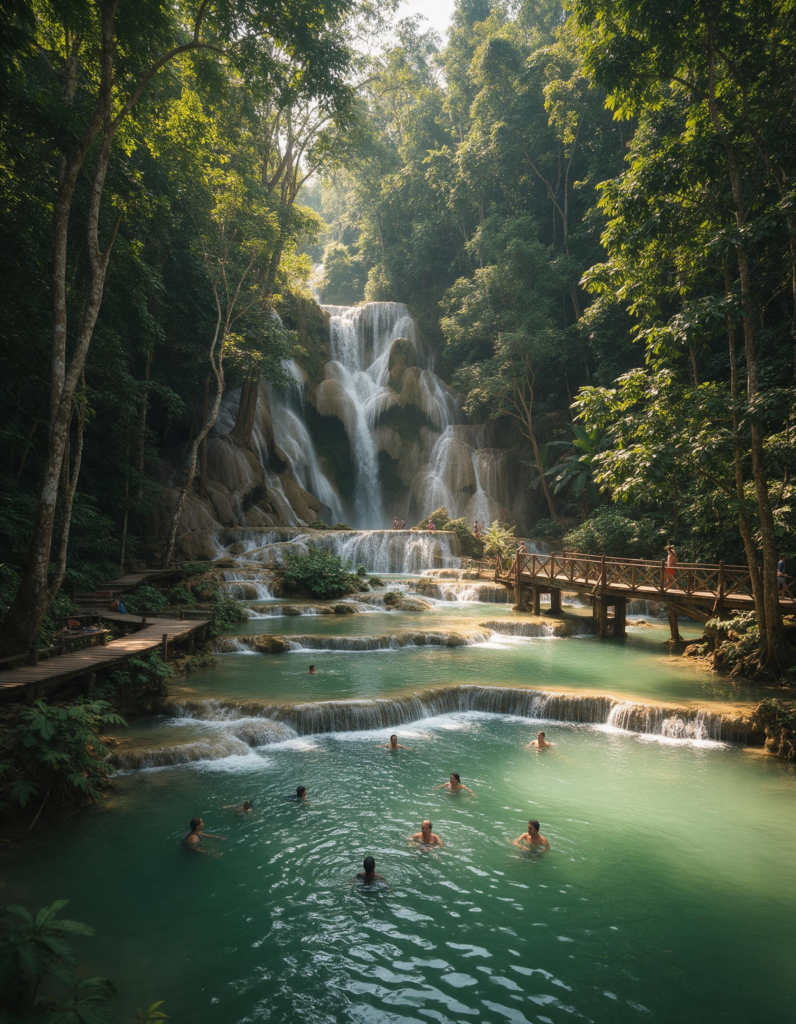
Erawan is the waterfall I recommend most to visitors. It has seven distinct tiers, each with a natural swimming pool, connected by jungle trails. The water is a striking turquoise colour due to mineral deposits. Fish in the pools will gently nibble dead skin from your feet — a natural spa treatment, though it tickles.
- Location: Erawan National Park, Kanchanaburi Province, 65 km from Kanchanaburi town.
- How to get there: Bus or minivan from Bangkok to Kanchanaburi (2-3 hours, 100-150 THB / $2.85-$4.30 USD). Then songthaew from Kanchanaburi to the park (1.5 hours, 50-80 THB / $1.40-$2.30 USD per person).
- Entrance fee: 300 THB ($8.50 USD) for foreigners, 50 THB for Thais.
- Best time: November to February. Avoid weekends (very crowded).
- Facilities: Car park, toilets, food stalls, camping available (150 THB / $4.30 USD per tent).
- Tip: Hike to the top tier (tier 7) — it takes about 45 minutes and the crowds thin out significantly. The trail gets steeper and rockier as you ascend, so wear proper shoes.
2. Haew Narok (Khao Yai) — Most Powerful
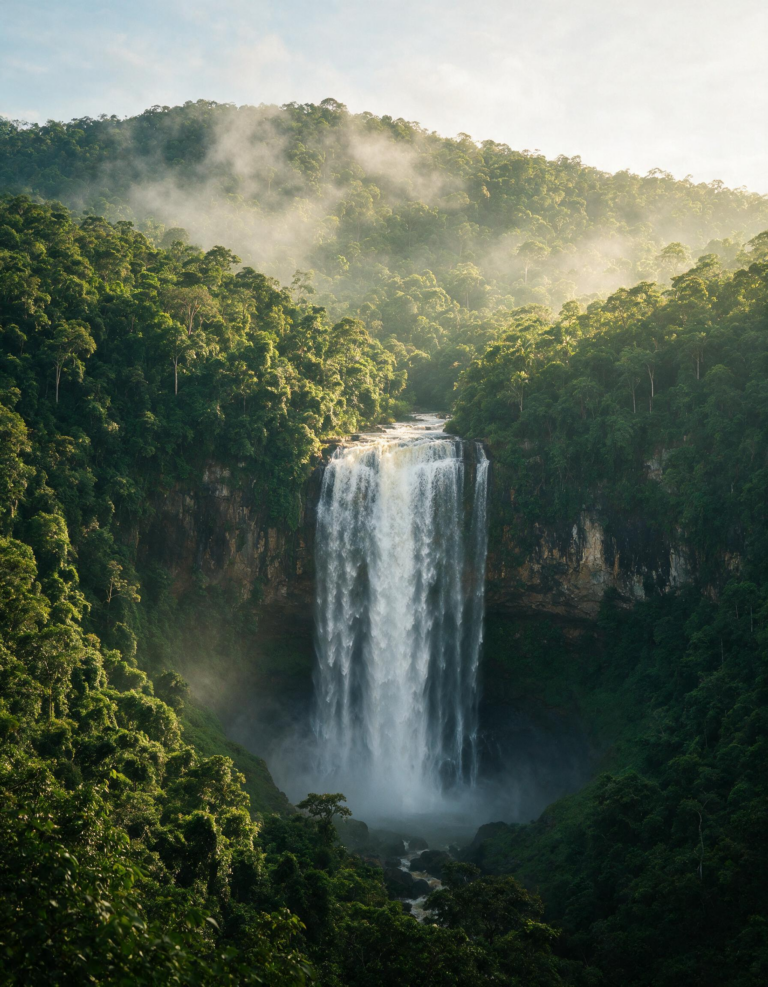
Haew Narok (“Hell’s Abyss”) is the most powerful waterfall in Khao Yai National Park. It drops 80 metres in three tiers, and the roar of the water can be heard from the trail. A viewing platform at the top offers a dramatic perspective, and a steep staircase descends to a lower viewpoint. You cannot swim here — the current is too dangerous.
- Location: Khao Yai National Park, Nakhon Ratchasima Province.
- How to get there: See Khao Yai guide (Day 21) for full transport details.
- Entrance fee: 400 THB ($11.40 USD) for foreigners (covers entire park).
- Best time: September to November (after the rainy season, the water volume is at its peak).
- Tip: Go early in the morning for the best light and fewest people. The staircase to the lower viewpoint is steep and can be slippery.
3. Thi Lo Su (Umphang) — Most Spectacular and Remote
Thi Lo Su is widely considered the most spectacular waterfall in Thailand. It spans approximately 200 metres wide and drops about 200 metres in multiple cascades over a limestone cliff. The setting is pristine jungle in the UNESCO-listed Thungyai Naresuan Wildlife Sanctuary. Getting there is an adventure in itself.
- Location: Umphang District, Tak Province (western Thailand, near the Myanmar border).
- How to get there: Fly or bus to Mae Sot (Tak Province). From Mae Sot, take a songthaew to Umphang (4 hours on a winding mountain road, about 150-200 THB / $4.30-$5.70 USD). From Umphang, hire a 4WD truck to the waterfall trailhead (1.5-2 hours, 1,500-2,000 THB / $43-$57 USD per truck, shared among passengers). Then hike about 1 km to the falls.
- Entrance fee: 500 THB ($14.30 USD) for foreigners.
- Best time: June to November (rainy and cool seasons). In the dry season (February-May), the water volume drops dramatically and access may be restricted.
- Where to stay: Umphang has guesthouses (300-800 THB / $8.50-$23 USD). Some people camp near the falls.
- Tip: This is a two-day trip minimum from Bangkok or Chiang Mai. The journey is part of the experience — the road to Umphang passes through stunning scenery and there are several other waterfalls along the way (Thi Lo Le, Se Pla Le).
4. Na Muang Waterfalls (Koh Samui) — Best Island Waterfall
Koh Samui has two Na Muang waterfalls. Na Muang 1 is a 18-metre cascade with a natural pool for swimming. Na Muang 2 is taller (30 metres) and more dramatic but has no swimming pool. Both are in the jungle interior of the island, easily accessible by road.
- Location: Central Koh Samui, Surat Thani Province.
- How to get there: Rent a scooter (200-300 THB / $5.70-$8.50 USD per day) or hire a songthaew (300-500 THB / $8.50-$14.30 USD round trip from beach areas).
- Entrance fee: Free (no national park fee for these falls).
- Best time: September to December (after rainy season).
- Tip: The falls are popular and can be crowded. Arrive before 10 AM. Elephant trekking camps used to operate near the entrance — please avoid these, as elephant welfare standards in Thailand are often poor. Enjoy the falls instead.
5. Pha Suea (Mae Hong Son) — Best on the Northern Loop
Pha Suea is a beautiful five-tiered waterfall on the Mae Hong Son Loop, one of Thailand’s most scenic road trips. The waterfall is wide and picturesque, especially in the rainy season when water flows across the full width of the cliff face.
- Location: Near Pai/Ban Rak Thai, Mae Hong Son Province.
- How to get there: Part of the Mae Hong Son Loop. Drive or take a minivan from Chiang Mai to Pai (3 hours), then continue to Mae Hong Son. The falls are about 20 km from Mae Hong Son town.
- Entrance fee: 100 THB ($2.85 USD) for foreigners.
- Best time: June to October (rainy season for maximum water flow).
- Tip: Combine with a visit to the nearby Ban Rak Thai village (a Chinese Kuomintang settlement famous for tea and viewpoints) and the Pai Canyon.
General Tips for Waterfall Visits in Thailand
- Timing is everything: Visit during or just after the rainy season (June-November) for maximum water flow. From January to April, many waterfalls are reduced to a trickle.
- Flash flood danger: During heavy rain, water levels can rise rapidly. Always check with park rangers before entering streams or pools. If the water turns brown or you hear rumbling, get to high ground immediately.
- Footwear: Rocks around waterfalls are extremely slippery. Wear water shoes or old trainers with grip. Flip-flops are dangerous.
- Wildlife: Watch for snakes on jungle trails, especially near water. Leeches are common in the wet season — wear leech socks or long pants tucked into socks.
- Respect the water: Several people drown at Thai waterfalls each year. Do not swim at the top of falls, do not dive into pools (depth is unpredictable), and never swim alone.
- Leave no trace: Take all rubbish with you. Do not use soap or shampoo in natural pools.
Quick Cost Comparison
| Waterfall | Entrance Fee (Foreigner) | Distance from Bangkok | Time Needed |
|---|---|---|---|
| Erawan | 300 THB ($8.50) | 200 km (3 hrs) | Full day |
| Haew Narok | 400 THB ($11.40) | 200 km (3 hrs) | Full day |
| Thi Lo Su | 500 THB ($14.30) | 500 km (2 days) | 2-3 days |
| Na Muang | Free | 650 km + ferry | Part of island visit |
| Pha Suea | 100 THB ($2.85) | 900 km (Mae Hong Son Loop) | Part of loop trip |