Som Tum: Thailand’s Spicy Green Papaya Salad
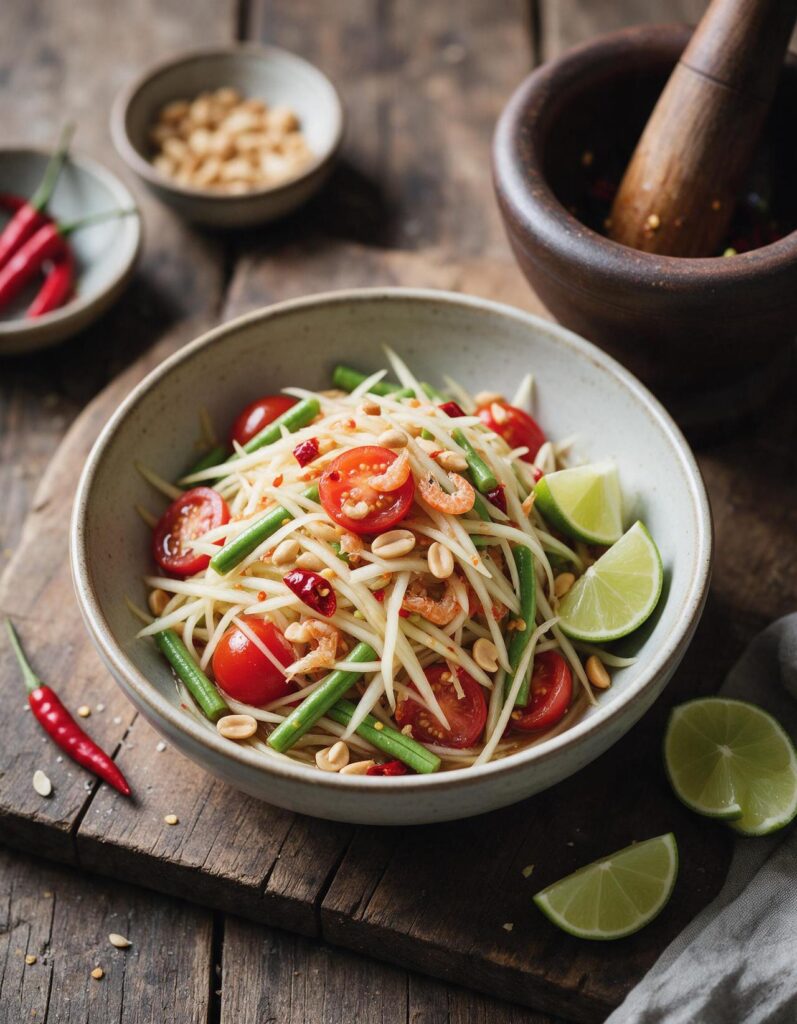
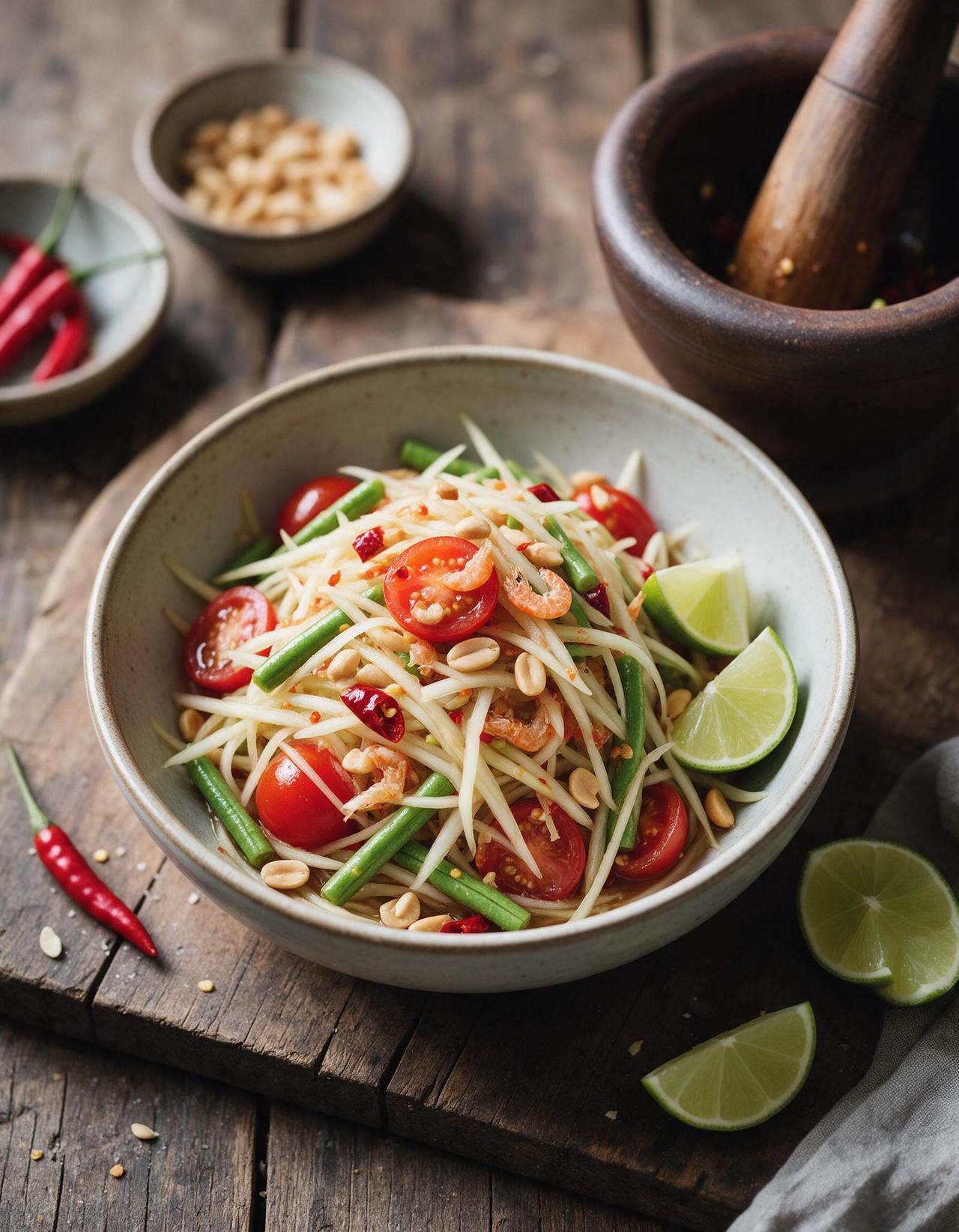
Som Tum, Thailand’s iconic green papaya salad, is the undisputed queen of Thai street food. Originating from the Isan region in northeastern Thailand, it is a dish that perfectly captures the Thai culinary philosophy of balancing sweet, sour, salty, and spicy in every bite. The base is simple, shredded unripe green papaya, but the magic lies in the pounding technique and the combination of fresh ingredients that go into the mortar. From humble street carts to high-end restaurants, som tum is eaten daily by millions of Thais and is an essential experience for any visitor to the country.
The Art of Making Som Tum
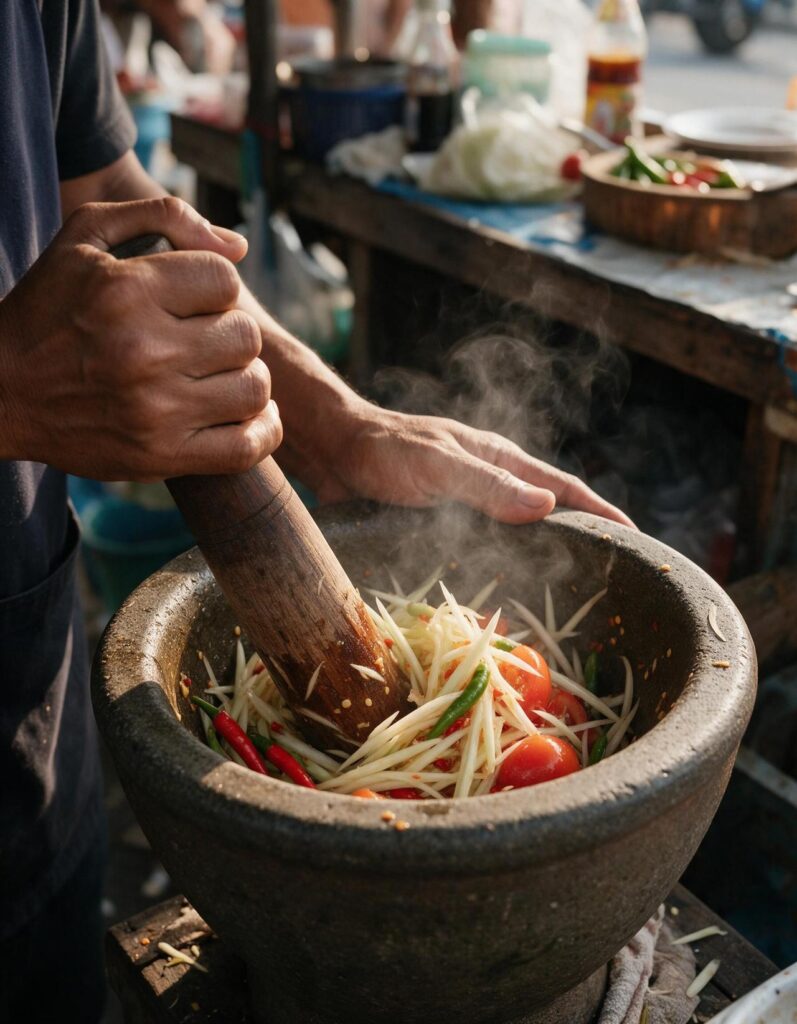
The traditional tool for making som tum is a clay or stone mortar (krok) and wooden pestle (sai). The process begins by pounding garlic and bird’s eye chillies into a rough paste, then adding long beans, cherry tomatoes, and dried shrimp. Lime juice, fish sauce, and palm sugar are added to create the dressing, and finally, the shredded green papaya is added and lightly pounded to absorb the flavours without becoming mushy. The entire process takes about three minutes, and the result should be a vibrant, crunchy salad with a dressing that coats every strand of papaya. The peanuts are added last, lightly crushed so they retain their crunch.
Variations: From Classic to Thai-Muslim Fusion
The most traditional version is Som Tum Thai, which includes dried shrimp and peanuts. Som Tum Poo Plaa adds fermented crab and pla ra (fermented fish sauce), giving it a pungent, deeply savoury flavour that is an acquired taste but beloved in Isan. Som Tum Lao is the Laotian version, also using pla ra. For those who do not eat pork or seafood, Som Tum Jay (vegetarian) omits the dried shrimp and uses soy sauce instead of fish sauce. Perhaps the most decadent variation is Som Tum Sua, which mixes the salad with rice noodles for a heartier meal. Each version has its devotees, and trying several is part of the fun.
Practical Tips for Visitors
- Where to eat: Street food carts are the best, look for a stall with a line of locals and a woman pounding a mortar. In Bangkok, try Som Tam Jay So on Sathorn Road or the som tum stalls at Or Tor Kor Market.
- Price: 40-60 THB ($1.20-$1.80 USD) at street stalls, 120-180 THB at restaurants.
- How to order spicy levels: ‘Mai phet’ (not spicy), ‘phet nit noi’ (a little spicy), ‘phet mak’ (very spicy). For the authentic Isan experience, ask for ‘phet sap’ (properly spicy), but be warned, it will burn.
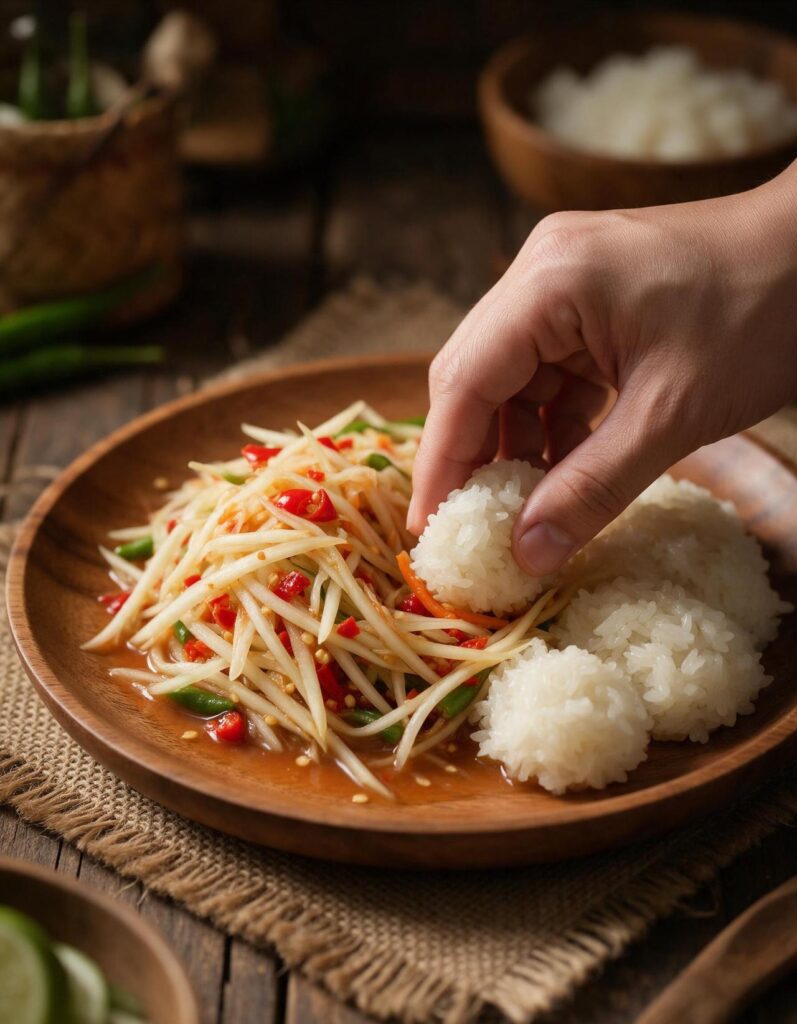
- What to eat it with: Sticky rice (khao niao) is the traditional accompaniment. Use your right hand to roll the rice into a small ball and dip it into the salad. Some also eat it with grilled chicken (gai yang) and fresh cabbage on the side.
- Vegetarian option: Ask for ‘som tum jay’ and specify ‘mai sai goong’ (no shrimp) and ‘nam pla jay’ (vegetarian sauce instead of fish sauce).
The spice level of som tum is a serious matter. The bird’s eye chilli (phrik khi nu), which is the standard chilli used, is one of the hottest varieties in the world, ranking at 50,000-100,000 Scoville units. When a Thai person asks if you want it spicy, they are genuinely warning you. If you are not accustomed to Thai spice levels, start with ‘phet nit noi’ (a little spicy) and work your way up. If you accidentally order it too spicy, do not reach for water, ask for more lime or sugar to balance the heat, or eat it with more sticky rice. Dairy, which is the antidote to capsaicin in Western cuisines, is not available at most som tum stalls.
Som tum is more than just a dish; it is a social institution in Thailand. It is the food that construction workers eat for lunch, that office workers grab after work, and that families share at weekend gatherings. The act of eating som tum together, reaching into a shared plate of sticky rice and salad, is a communal experience that embodies the Thai values of sharing and togetherness. When you sit on a plastic stool at a som tum cart, watching the vendor pound your salad to order, you are not just eating, you are participating in one of Thailand’s most authentic daily rituals.
For adventurous eaters, the fermented crab version (som tum poo plaa) is worth seeking out. The crabs are small, freshwater crabs that have been fermented in salt and rice for several days. They add a funky, umami depth to the salad that is impossible to replicate. This is the version that most Thais from Isan consider the ‘real’ som tum, and while it is an acquired taste, it is one of the most authentic culinary experiences you can have in Thailand. Just make sure the stall is clean and the crabs are fresh, as improper fermentation can cause food poisoning.