Northern Thai Food for Beginners: A Local’s Guide to Lanna Cuisine
Northern Thai cuisine, also known as Lanna cuisine, is a world apart from the Thai food most foreigners know. While central Thai food (the kind found in most overseas Thai restaurants) is characterised by coconut milk, sugar, and fresh herbs, northern Thai food is smoky, herbal, pork-driven, and eaten with sticky rice rather than jasmine rice. The region was once the independent Lanna Kingdom, and its food reflects centuries of influence from Burma, China, and the Shan people. As a Thai person from the north, here is my guide for beginners.
The Foundations of Northern Thai Food
Before diving into specific dishes, understand these three foundations:
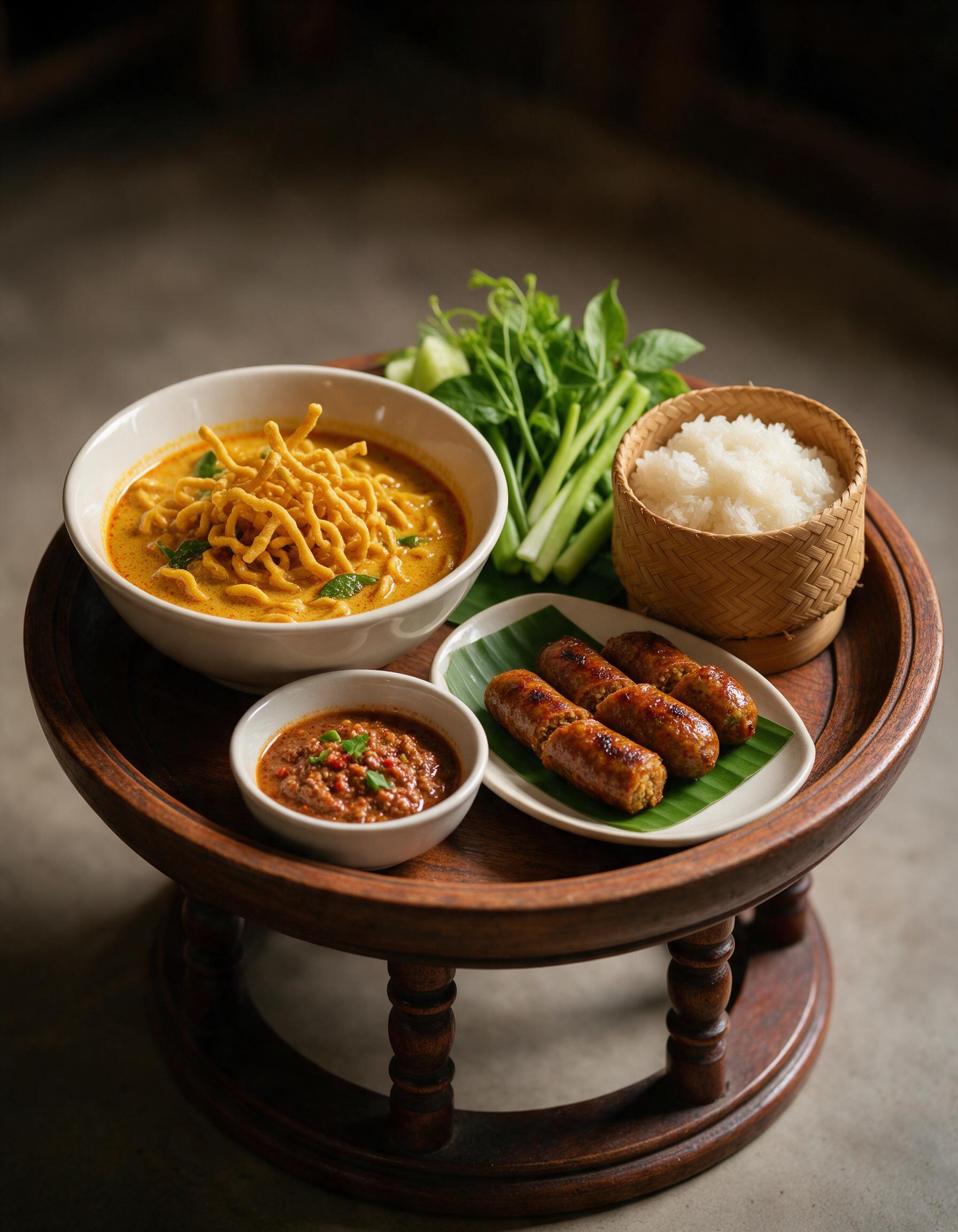
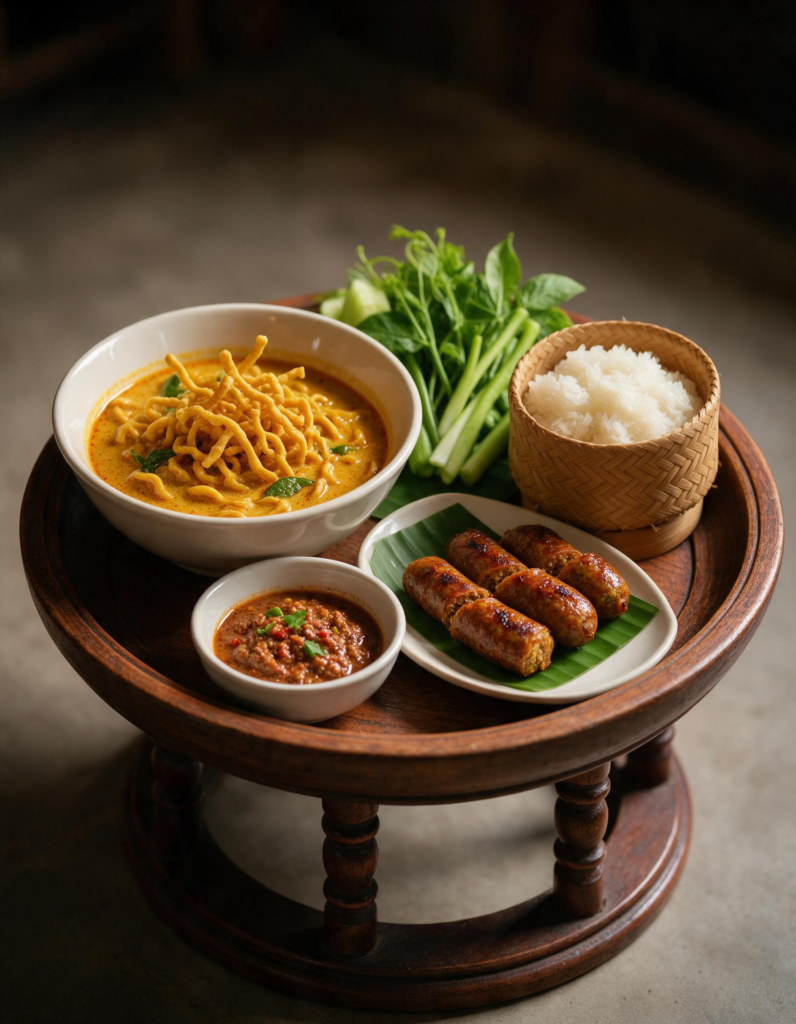
- Sticky rice (khao niao): This is the staple. Eaten with the hands — you grab a small handful, roll it into a ball, and dip it into curries, dips, and sauces. It is served in a woven bamboo basket (kratip) that keeps it warm and moist.
- Smokiness: Many northern dishes are grilled over charcoal, and the chillies for dips are often charred over open flame before being pounded. This gives the food a distinctive smoky depth.
- Less sweet, more herbal: Northern food uses less sugar than central Thai food. The flavour profile leans toward smoky, salty, bitter, and herbal rather than sweet and sour.
The 7 Essential Northern Thai Dishes
1. Khao Soi (50-70 THB / $1.45-$2 USD)
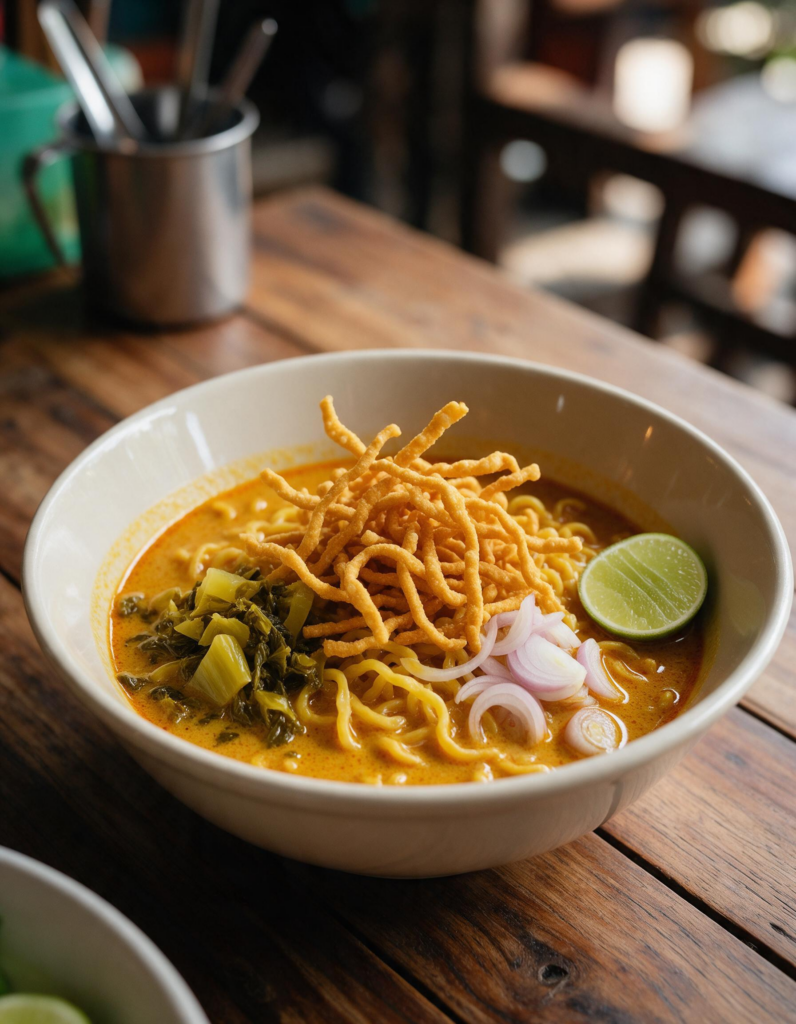
The defining dish of Chiang Mai. Soft egg noodles in a rich, slightly sweet curry broth (made with coconut milk, but less than southern curries), topped with a nest of crispy fried noodles for crunch. Served with pickled mustard greens, raw shallots, and a side of chilli paste (nam prik pao) that you stir in to add heat. Squeeze lime over the top. This is comfort food at its finest.
Best locations in Chiang Mai: Khao Soi Khun Yai (near Chang Phuak Gate, 50 THB, queues but worth it), Khao Soi Mae Sai (near the north moat, 60 THB, excellent and less crowded), and Khao Soi Lam Duan (Fah Ham Road, the oldest khao soi restaurant in Chiang Mai, been operating since 1950).
2. Sai Ua — Northern Thai Sausage (50-80 THB / $1.45-$2.30 USD)
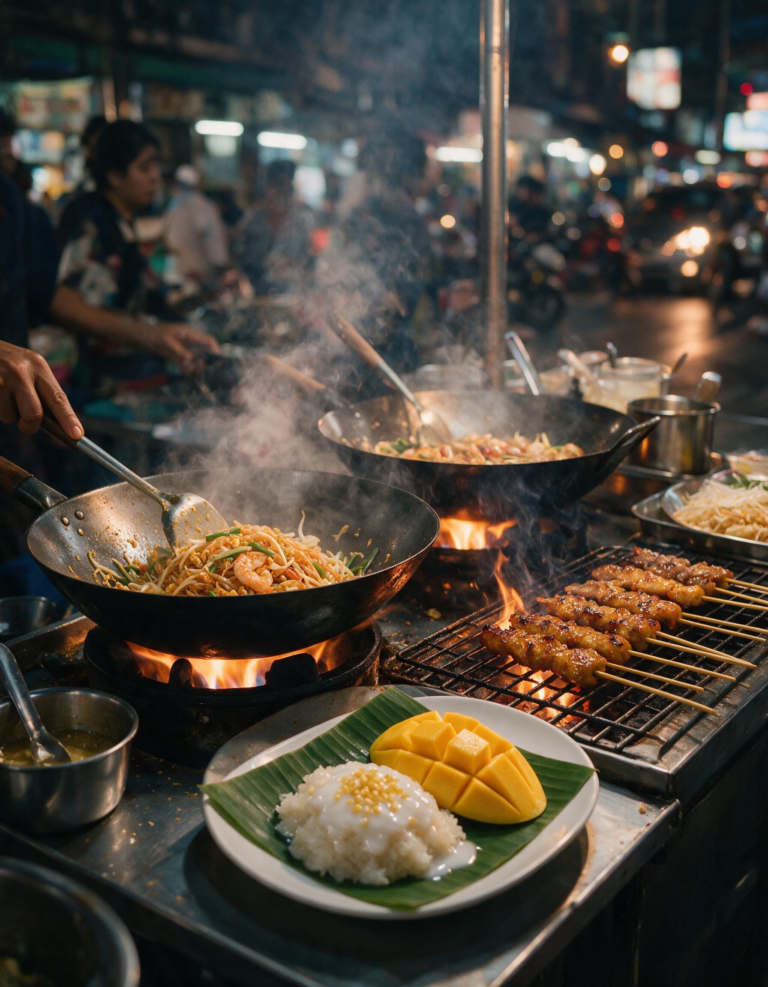
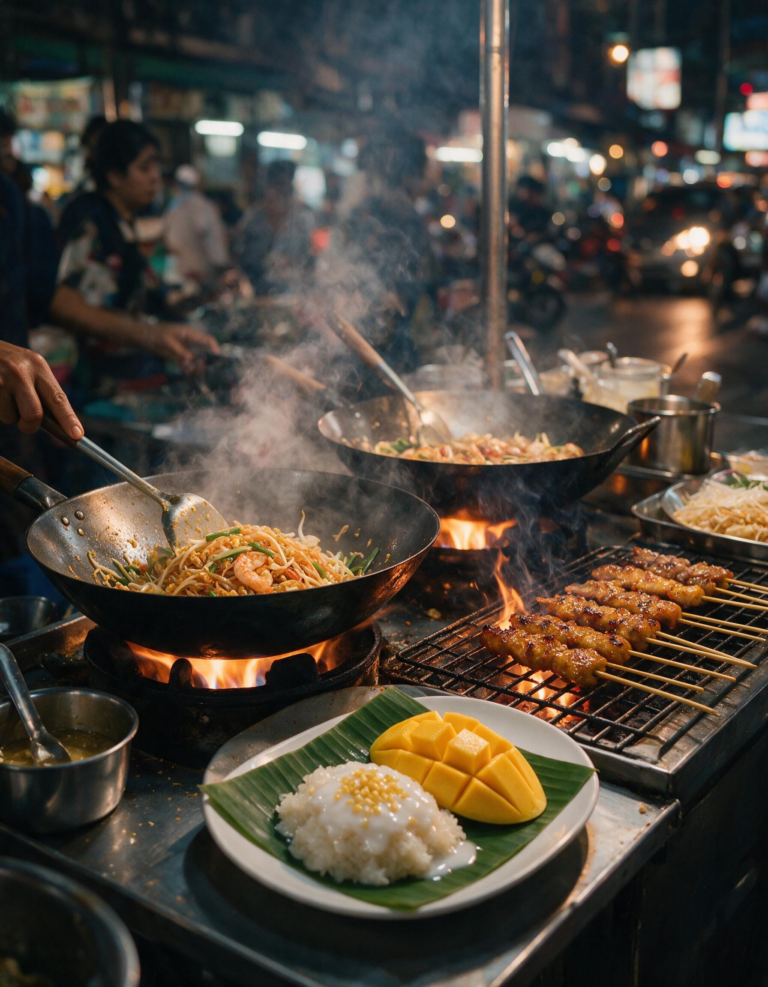
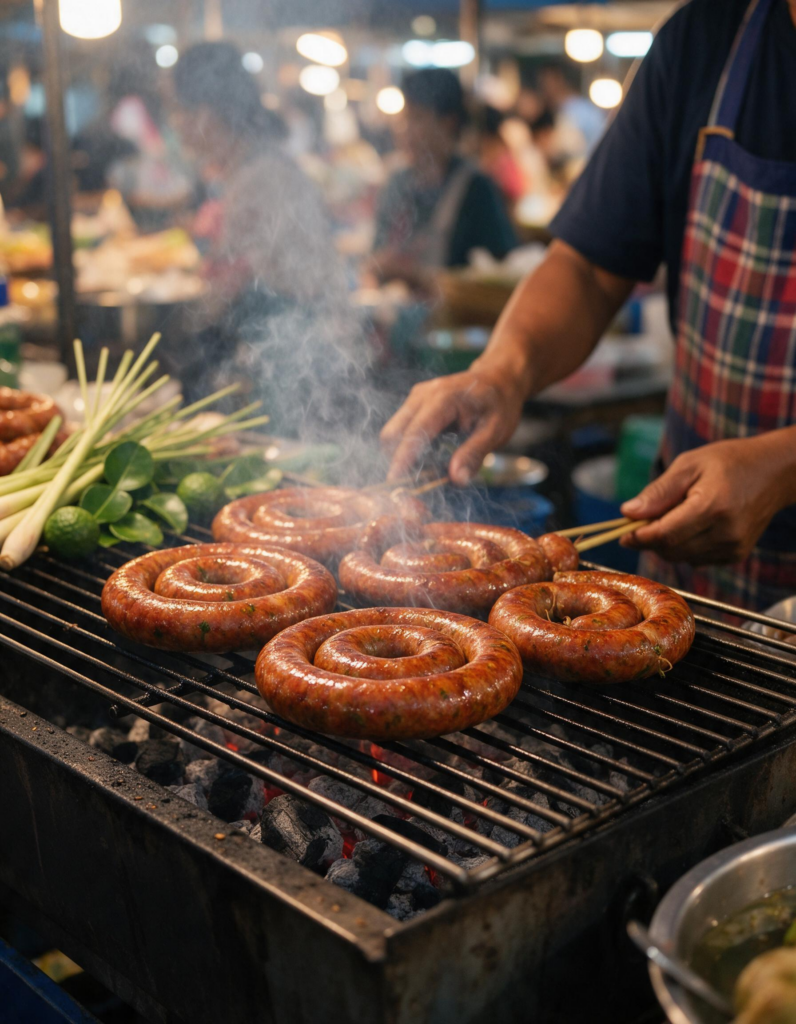
A grilled sausage stuffed with minced pork, lemongrass, galangal, kaffir lime leaves, chillies, and herbs. The flavour is aromatic and complex — nothing like a Western sausage. It is smoky from the charcoal grill and best eaten with sticky rice and a green chilli dip (nam prik noong). Available at every market in Chiang Mai. Best at the Chiang Mai Gate Night Market or the Saturday Walking Street.
3. Nam Prik Noong (30-50 THB / $0.85-$1.45 USD)
A smoky dip made from charred tomatoes, chillies, garlic, and shallots, pounded in a mortar with shrimp paste. It is served with fresh and steamed vegetables — cucumber, long beans, cabbage, eggplant — and sticky rice. The smoking of the vegetables over an open flame gives the dip a depth that raw versions cannot match. Spicy, smoky, and deeply savoury.
4. Nam Prik Ong (30-50 THB / $0.85-$1.45 USD)
Another dip, this one made with minced pork, tomatoes, chillies, and dried spices. It has a texture similar to a chunky Bolognese sauce but with the heat and aromatics of Thai cuisine. Originating from the Shan people of Myanmar, it is served the same way as nam prik noong — with vegetables and sticky rice.
5. Hang Lay — Burmese Pork Curry (120-200 THB / $3.45-$5.70 USD)
A slow-cooked pork belly curry with ginger, tamarind, and Burmese spices. The meat is tender and the sauce is rich, dark, and slightly sweet-sour. This dish reflects the strong Burmese influence in northern Thai cuisine. Best at Huen Muan Jai restaurant (Ratchaphuek Alley, Chiang Mai, about 150 THB / $4.30 USD).
6. Gaeng Hang Lay (80-150 THB / $2.30-$4.30 USD)
Also sometimes called hang lay curry, this is a pork curry that uses no coconut milk. The broth is built from pork stock, tamarind, ginger, and a blend of dried spices (including star anise and cinnamon). It is rich, warming, and perfect for the cool season evenings in Chiang Mai (December-February).
7. Khanom Jeen Nam Ngiaw (40-60 THB / $1.15-$1.70 USD)
Fermented rice noodles served in a spicy, tomato-based broth with pork blood, minced pork, and dried flowers from the cotton tree (ngiw). The broth is intense and complex. This is a breakfast or lunch dish — look for it at morning markets, not restaurants.
Where to Eat Northern Thai Food
Khantoke Dinner
A khantoke dinner is the traditional way to experience northern Thai food. Multiple dishes are served on a small, low, round table (the khantoke), and you eat while seated on the floor. Traditional music and dance are often performed. In Chiang Mai, try the Old Cultural Centre (Wua Lai Road) for the most authentic experience, or Khum Khantoke for a more modern version. Cost: 400-600 THB ($11-$17 USD) per person including the show.
Local Markets
The best northern Thai food is found at markets, not restaurants. The Saturday Walking Street (Wua Lai Road) and Sunday Walking Street (Ratchadamnoen Road) in Chiang Mai both feature dozens of northern Thai dishes. The Chiang Mai Gate Night Market (every evening) is where locals go for sai ua, khao soi, and nam prik. Prices are 30-80 THB ($0.85-$2.30 USD) per dish.
Huen Phen
The most famous northern Thai restaurant in Chiang Mai (Ratchamanka Road, inside the Old City). The daytime menu is cheap and excellent (40-80 THB per dish). The evening menu is more expensive and served in a more formal setting. Order khao soi, hang lay, and nam prik noong.
How to Eat Northern Thai Food
- Use your hands. Sticky rice is meant to be eaten with the hands. Grab a small piece, roll it into a ball, and dip it into curries or dips.
- Share everything. Northern Thai meals are communal. Order several dishes and share them. A typical meal for two might include one curry, one dip, one grilled dish, sticky rice, and vegetables.
- Balance the flavours. Each bite should include rice, a main dish, and a raw vegetable. The vegetable provides crunch and freshness to balance the richness of the curries.
- Adjust spice to taste. Northern Thai food can be very spicy. The chilli paste (nam prik pao) served with khao soi is for adding heat — start with a little. If you need to cool things down, eat more sticky rice.
- Drink the local tea. Northern Thailand produces excellent tea (from the hills around Mae Hong Son and Chiang Rai). A glass of iced Oolong or Chinese-style tea is the perfect accompaniment.
Northern Thai Desserts
Northern Thai desserts are less sweet than central Thai ones. Try:
- Bua Loy: Rice flour balls in coconut milk, sometimes coloured with taro or pumpkin. About 30 THB ($0.85 USD).
- Khanom Thuay: Steamed coconut cream custard in small ceramic cups. About 20 THB ($0.60 USD) for a set of three.
- Sticky rice with mango: Yes, this is also a northern specialty during mango season (March-June).
A Final Note
Northern Thai food is the soul of the Lanna Kingdom — it is slow-cooked, smoke-kissed, and meant to be shared. If you visit Chiang Mai and only eat at western-style restaurants or order green curry from a menu designed for tourists, you have missed the point entirely. Seek out the markets, find the stalls with Thai customers, sit on a plastic stool, and eat with your hands. This is the real Thailand.