Khao Soi: Northern Thailand’s Iconic Curry Noodle Soup
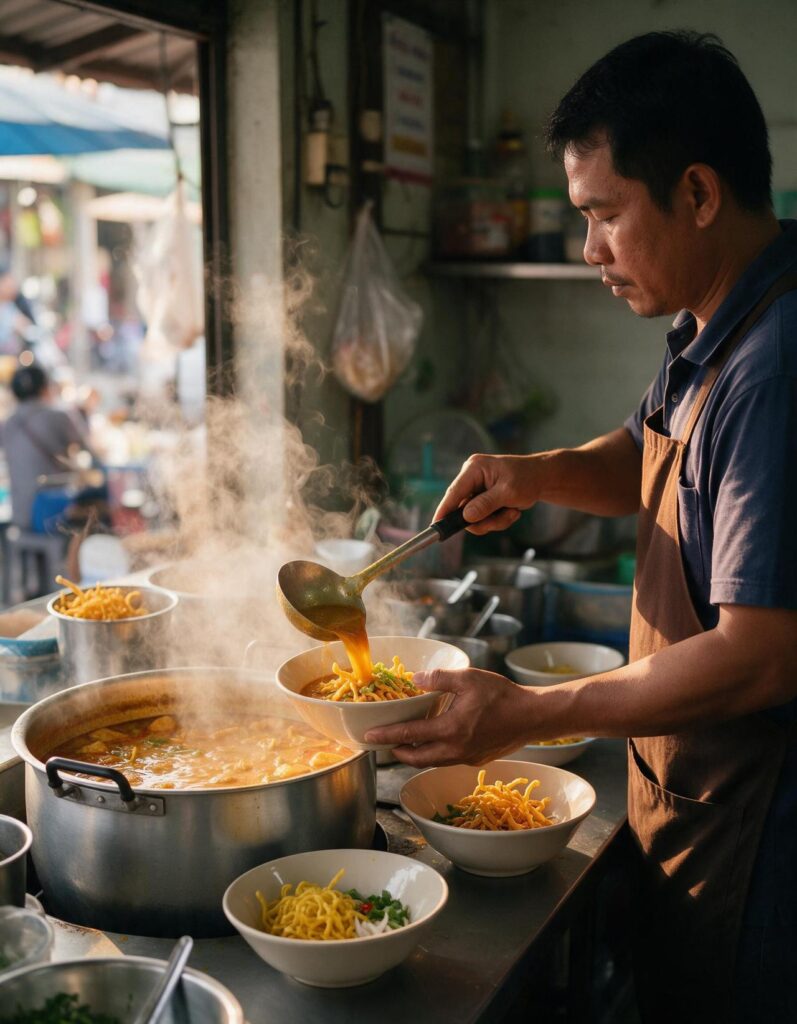
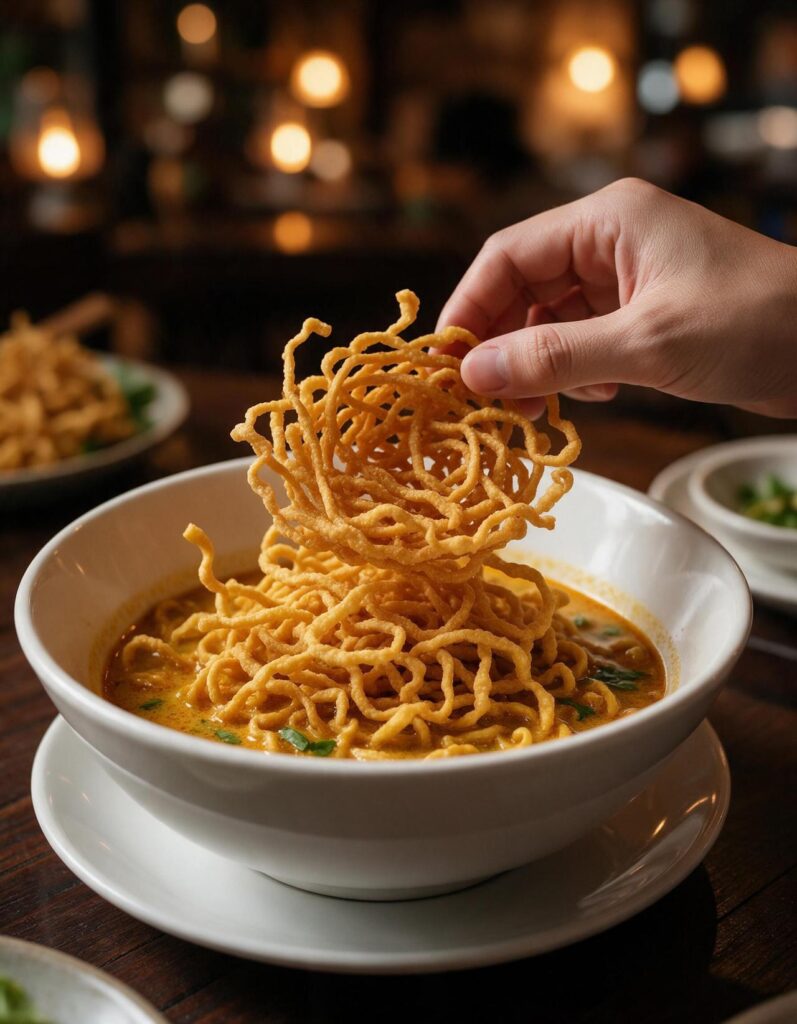
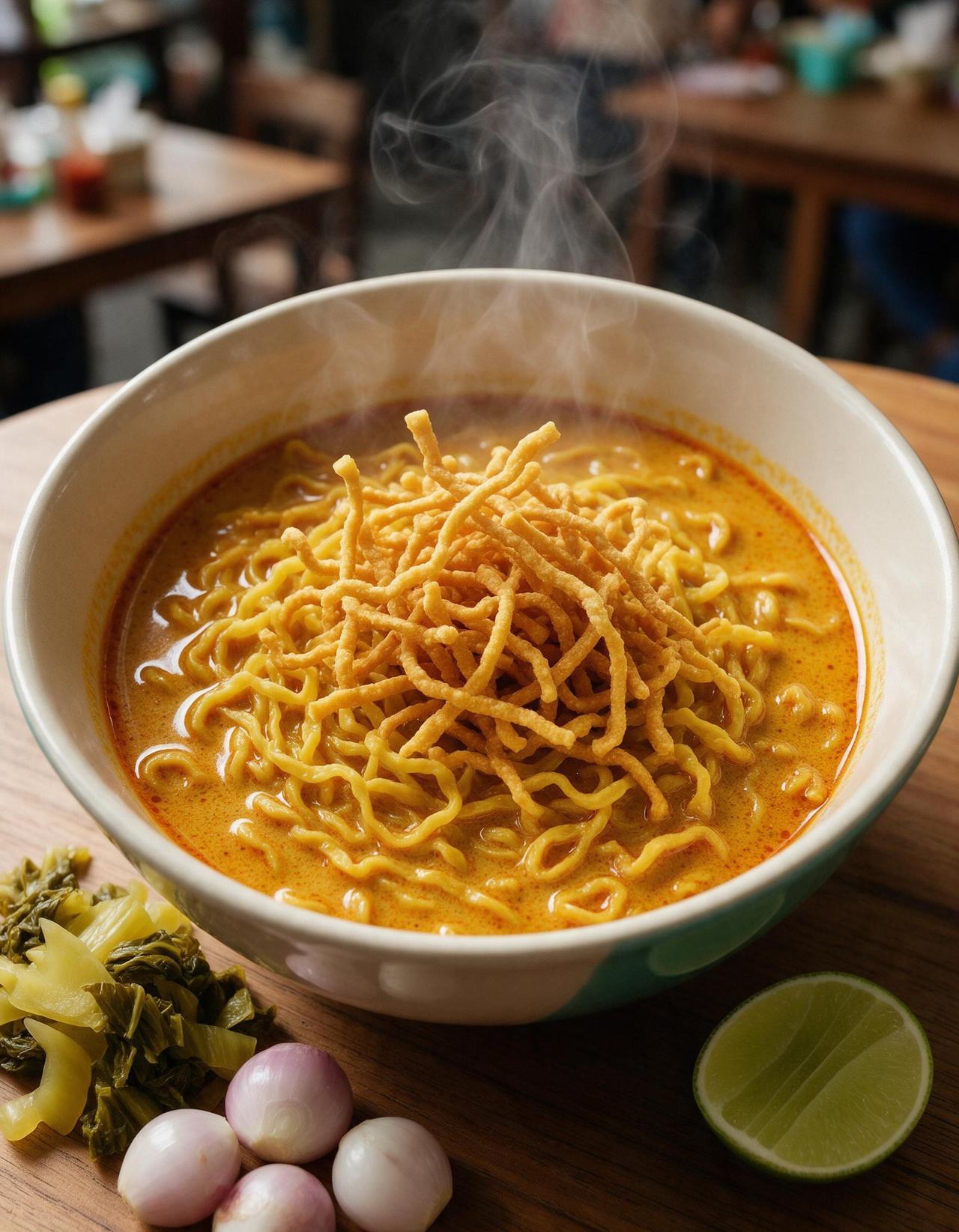
Khao Soi is the undisputed king of Northern Thai cuisine, a bowl of curry noodle soup so beloved that it has its own museum in Lampang. The dish consists of soft wheat noodles in a rich, aromatic coconut curry broth, topped with a handful of crispy deep-fried noodles for textural contrast, and served with a side of pickled mustard greens, raw shallots, and a lime wedge. If you visit Chiang Mai and eat only one thing, make it khao soi.
The Origins and History of Khao Soi
The word khao soi translates literally to ‘cut rice’ but the dish as we know it today is a product of cultural exchange. It is believed to have been brought to Northern Thailand by Chinese Muslim traders, specifically the Chin Haw, who travelled the ancient tea caravan routes from Yunnan. The dish evolved from a simple noodle soup into a complex curry through the influence of Burmese and northern Thai culinary traditions. Today, the most authentic versions are found in Chiang Mai, Chiang Rai, and Lampang, and each region has its own subtle variation in spice level and richness.
What Makes a Great Khao Soi
The soul of khao soi is the curry paste, which typically includes dried red chillies, garlic, shallots, ginger, turmeric, and sometimes shrimp paste. This is simmered with coconut milk until the oil separates, then combined with chicken or beef stock. The broth should be thick enough to coat the noodles but not so heavy that it overwhelms. The meat, usually chicken thigh or beef shank, should be fall-apart tender from slow braising in the curry. The crispy noodle topping is not optional, it is what gives the dish its signature crunch that softens slightly as it absorbs the broth.
Practical Tips for Visitors
- Where to eat in Chiang Mai: Khao Soi Khun Yai (near the north gate of the old city) for the classic version, Khao Soi Mae Sai for a richer, spicier broth, and Khao Soi Lam Duan for a slightly sweeter, tourist-friendly version.
- Price: A bowl costs 40-70 THB ($1.20-$2 USD) at local shops. Expect to pay 120-180 THB at hotel restaurants.
- Best time to eat: Khao soi is traditionally a lunch dish. Most famous shops open around 10:00 AM and sell out by 2:00 PM. Go early for the freshest broth.
- How to order like a local: Ask for ‘khao soi gai’ (chicken) or ‘khao soi nuea’ (beef). Say ‘phet nit noi’ for slightly spicy, or ‘mai phet’ for not spicy.
- Customise your bowl: Squeeze the lime, add a spoonful of pickled mustard greens and shallots, and mix the crispy noodles into the broth. This is how locals eat it.
The condiment tray is what separates a good khao soi experience from a great one. Every proper khao soi shop provides a small plate with pickled mustard greens (pak gat dong), finely sliced shallots, lime wedges, and sometimes chilli paste or chilli flakes in vinegar. The magic is in adding these to your bowl one at a time, tasting as you go. The lime brightens the curry, the pickled greens add a tangy crunch, and the shallots provide a sharp bite that cuts through the richness of the coconut milk.
For those who want to recreate the dish at home, the key is the curry paste. You can buy pre-made khao soi paste at markets in Chiang Mai, but making it from scratch with a mortar and pestle is a rewarding experience. The paste can be stored frozen for months. The noodles used are fresh wheat noodles, available at most Asian markets, and you will need both the soft and the crispy versions. A good khao soi should take at least an hour to prepare, and the broth improves if made a day in advance.
Khao soi is more than a meal; it is a cultural institution in Northern Thailand. It is the dish that families eat together on weekends, that students grab between classes, and that every visitor falls in love with. Do not make the mistake of ordering it at a fancy hotel restaurant. Find the shop with plastic stools and a line of locals, sit down, and prepare to have your understanding of Thai food completely transformed.