Mango Sticky Rice: Thailand’s Beloved Dessert
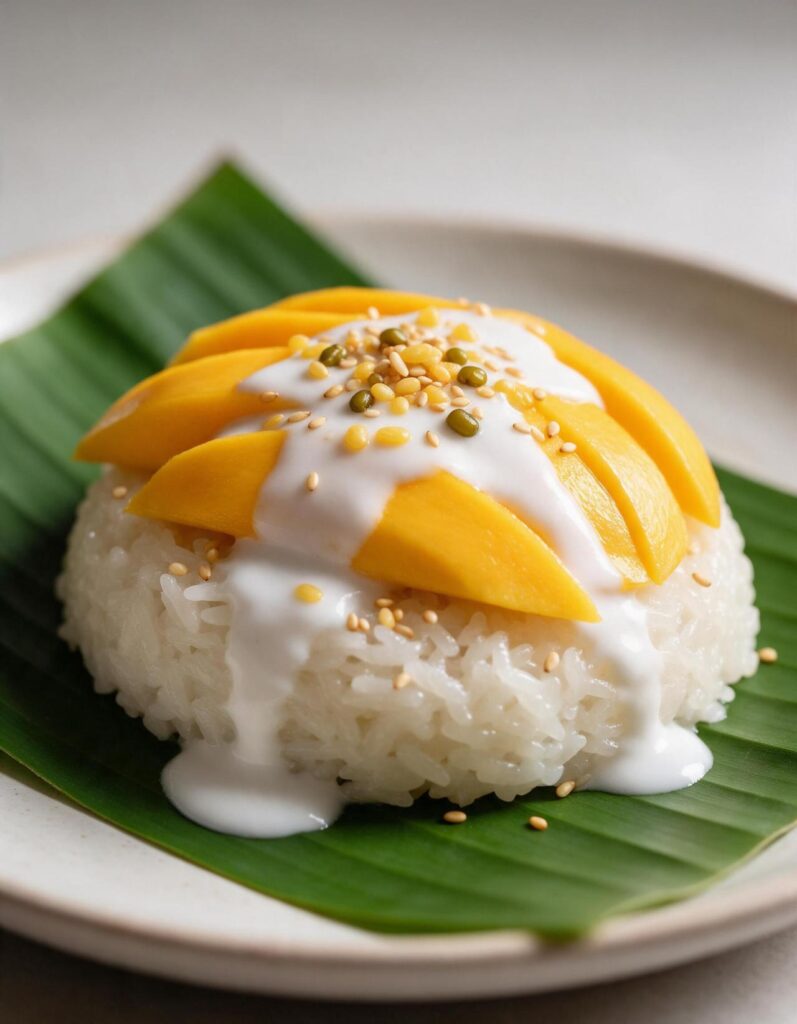
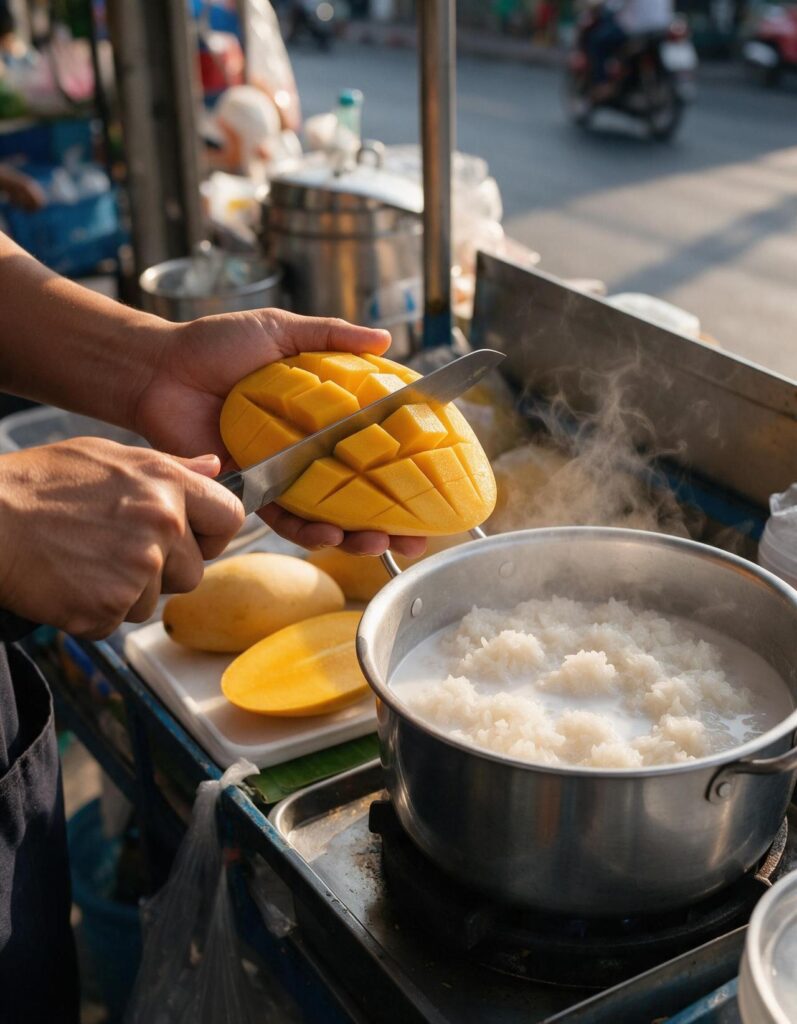
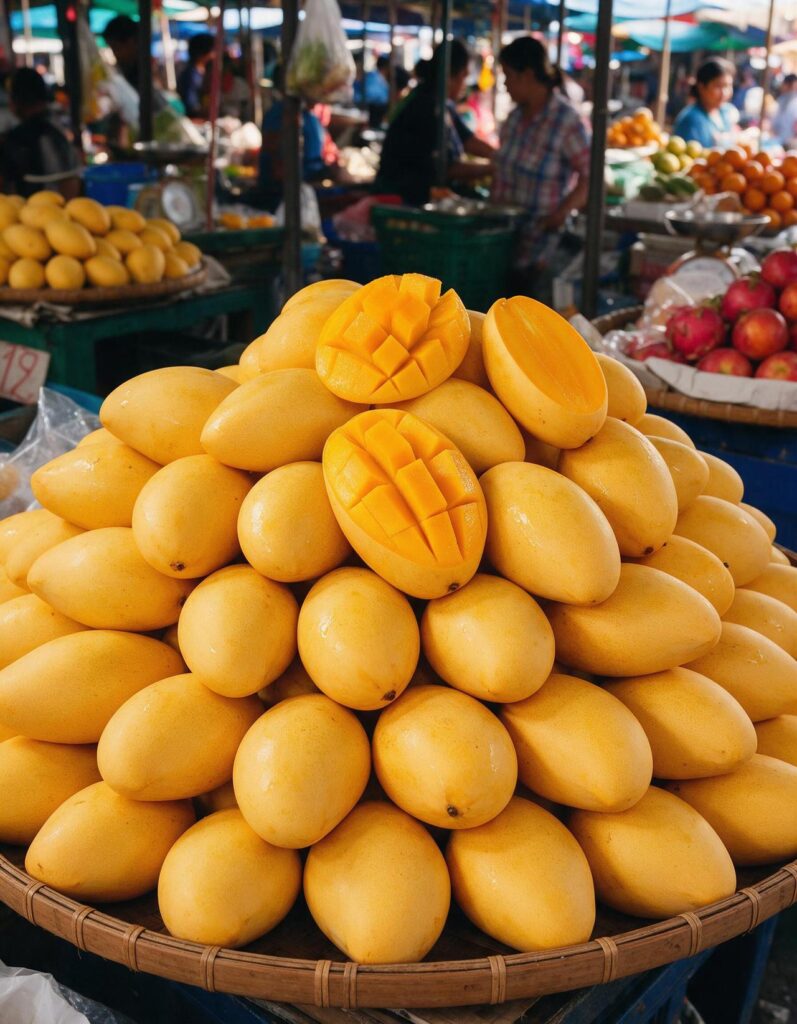
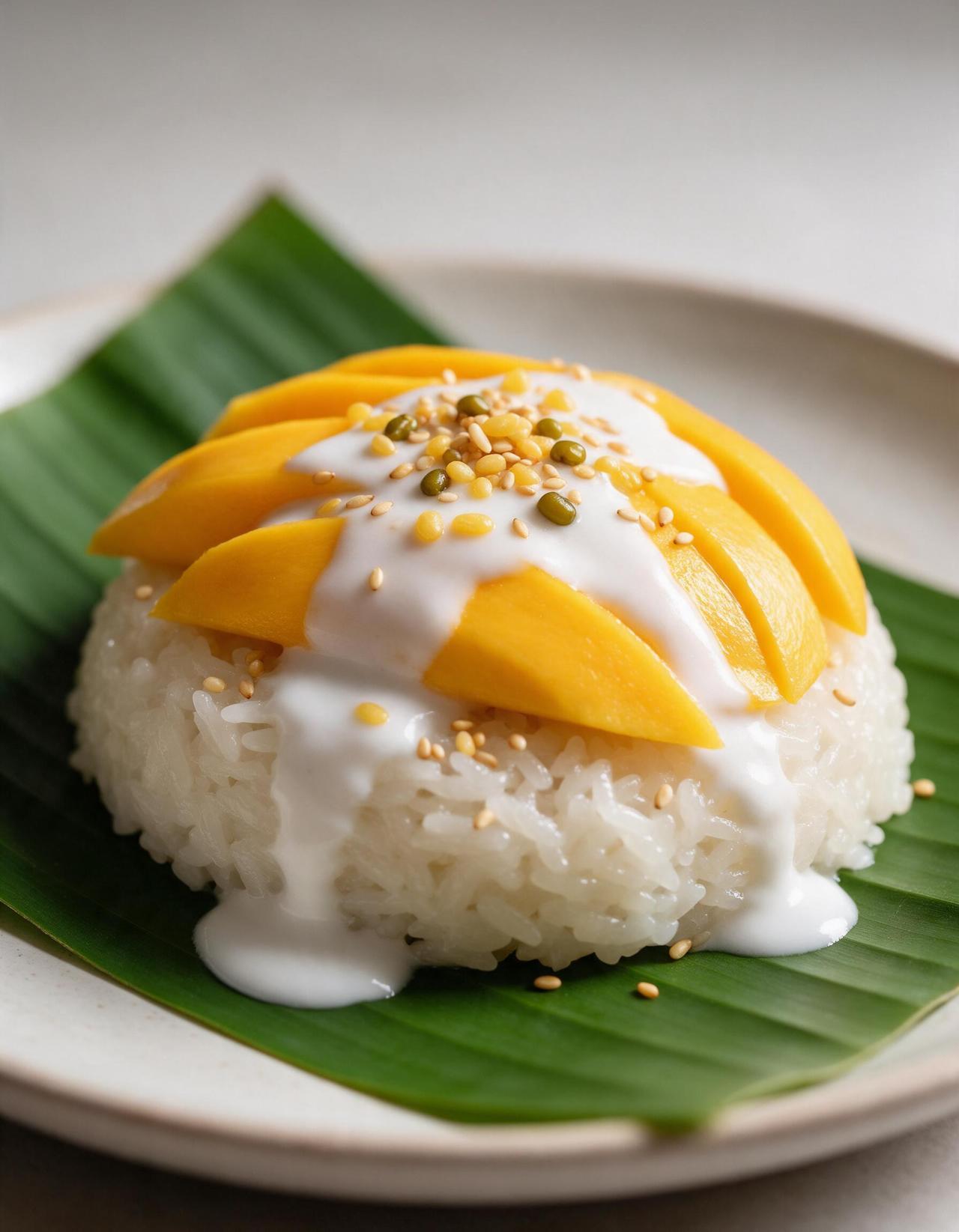
Khao Niao Mamuang, mango sticky rice, is the undisputed king of Thai desserts. This seemingly simple combination of sweet coconut-infused glutinous rice, ripe mango, and a drizzle of coconut cream is a seasonal obsession that grips the entire country from March to June, when Thai mangoes are at their peak. It is sold everywhere from five-star hotel buffets to street carts, and while the ingredients are simple, achieving the perfect balance of sweetness, saltiness, and texture requires genuine skill. For visitors, tasting a well-made mango sticky rice in peak season is a revelation.
The Ingredients and the Season
The dish relies on three key ingredients: glutinous rice (khao niao), which is a different variety from regular jasmine rice and has a sticky, chewy texture when cooked; nam kati, a mixture of coconut milk, sugar, and salt that is simmered and absorbed by the hot rice; and ripe Thai mangoes, specifically the varieties nam dok mai and ok rong, which are intensely sweet, fibreless, and aromatic. The season for Thai mangoes runs from March to June, with April being the peak month. Outside of this season, the dish is available but the mangoes are imported or artificially ripened, and the difference in quality is immediately apparent.
The rice is soaked for several hours, then steamed in a bamboo basket rather than boiled, which gives it the perfect texture. The coconut milk mixture is poured over the hot rice and left to absorb, which takes about 15-20 minutes. The key is the balance: the rice should be sweet but not cloying, the coconut cream should have a slight saltiness to cut through the sugar, and the mango should be ripe to the point of yielding to gentle pressure but not mushy. Toasted sesame seeds or mung beans add a nutty crunch that completes the dish.
Practical Tips for Visitors
- Best season: March to June, with April being peak mango season. This is when the fruit is at its sweetest and most flavourful.
- Where to eat in Bangkok: Mae Varee Mango Sticky Rice in Thong Lo is the most famous (150 THB). Also try the stall at Or Tor Kor Market for excellent quality and value.
- Price: 60-150 THB ($1.70-$4.30 USD) at street stalls, up to 350 THB at hotel restaurants.
- Look for: The mango should be golden yellow and fragrant. The rice should be warm and sticky, not dry or hard. The coconut cream should be thick and slightly salty.
- Making it at home: Buy glutinous rice (not regular rice), soak it for at least 4 hours, steam it, and mix with simmered coconut milk and sugar. Use canned coconut cream if fresh is unavailable.
For the best mango sticky rice experience, seek out the seasonal stalls that appear in Bangkok from March to June. These are often run by fruit vendors who specialize in mangoes during the season and make the sticky rice fresh throughout the day. The mangoes used will be perfectly ripe, and the rice will be warm and freshly steamed. Look for stalls in areas with high Thai foot traffic, particularly near office buildings and markets. A good vendor will let you choose your mango and will slice it to order.
Mango sticky rice has evolved beyond its traditional form in recent years. Innovative chefs and street vendors now offer variations including mango sticky rice ice cream, mango sticky rice crepes, and even mango sticky rice smoothies. While these are delicious in their own right, purists will argue that nothing can improve on the original. The combination of warm, sweet, salty, chewy rice with cool, fragrant, sweet mango is one of those rare culinary marriages where the whole is greater than the sum of its parts, and it has remained unchanged for generations for a reason.
If you fall in love with mango sticky rice during your visit and want to recreate it at home, the key is sourcing the right ingredients. Glutinous rice (also called sweet rice or sticky rice) is available at Asian markets, as is canned coconut cream. The real challenge is the mango: Thai varieties like nam dok mai are sometimes available at Asian grocers, but if you cannot find them, choose the ripest, sweetest, least fibrous mangoes you can find. Steam the rice rather than boiling it, use full-fat coconut cream, and do not skip the pinch of salt in the coconut mixture. It is the salt that makes the sweetness sing.