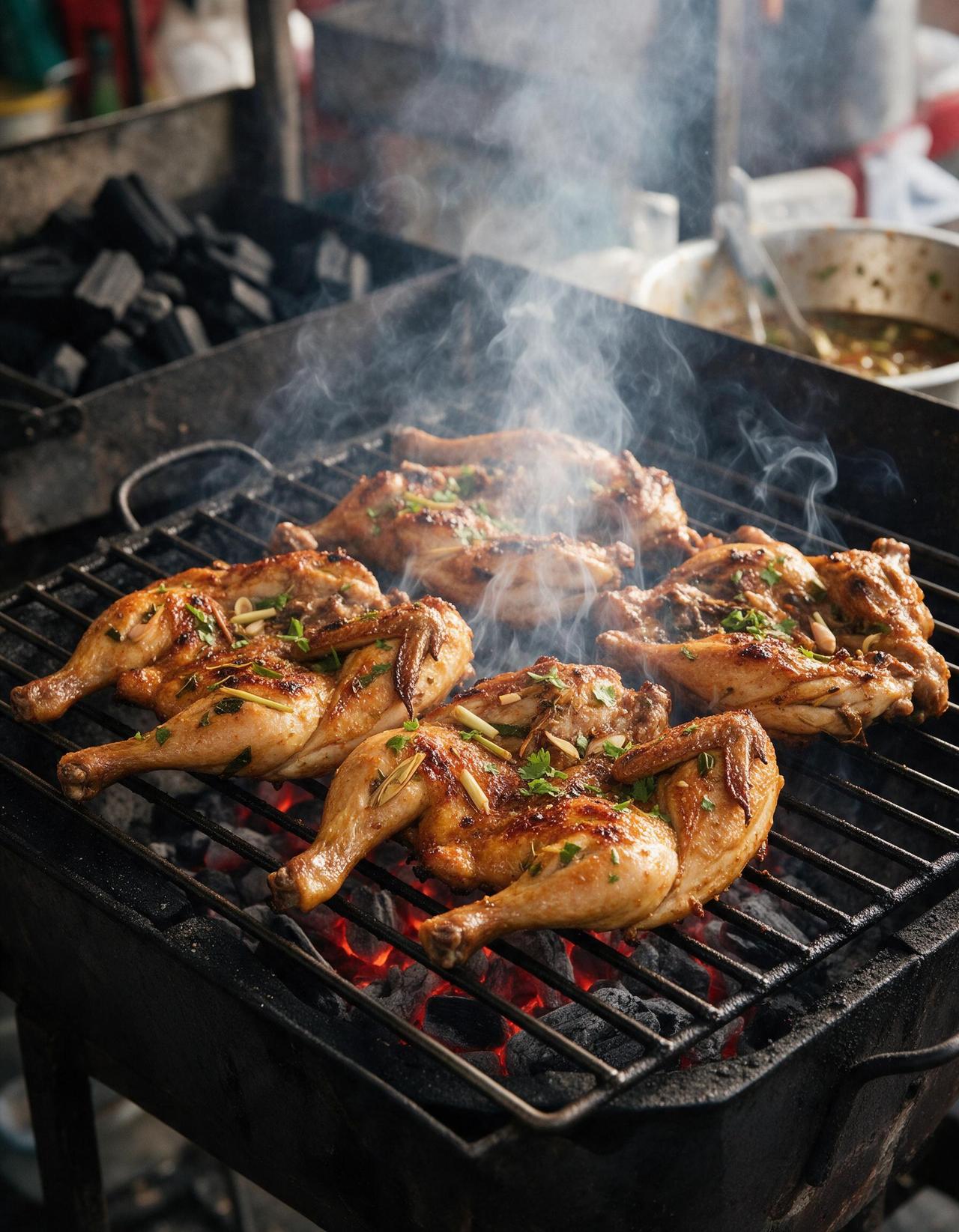
Gai Yang: Isan’s Charcoal-Grilled Chicken
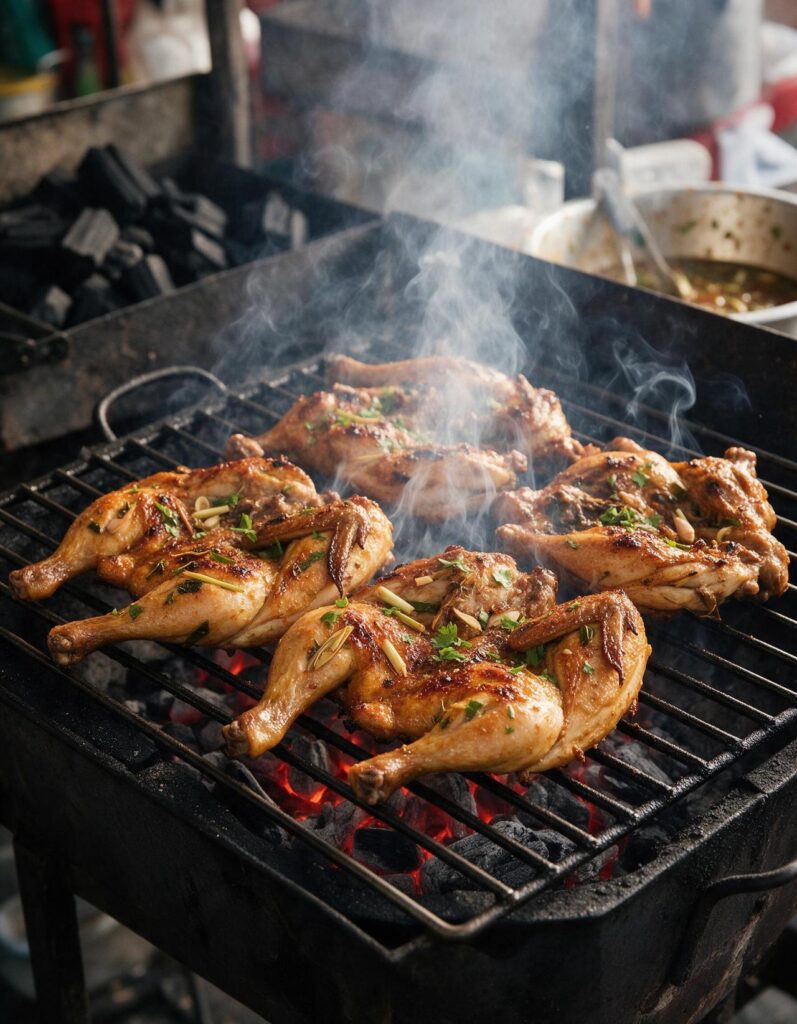
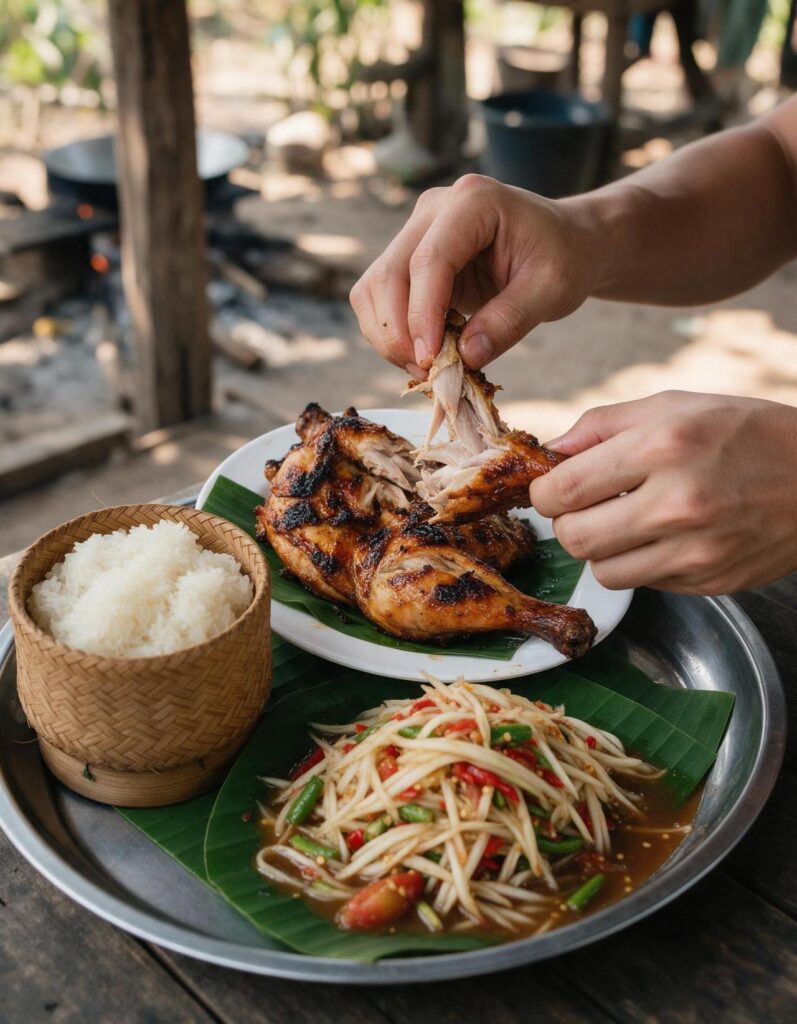
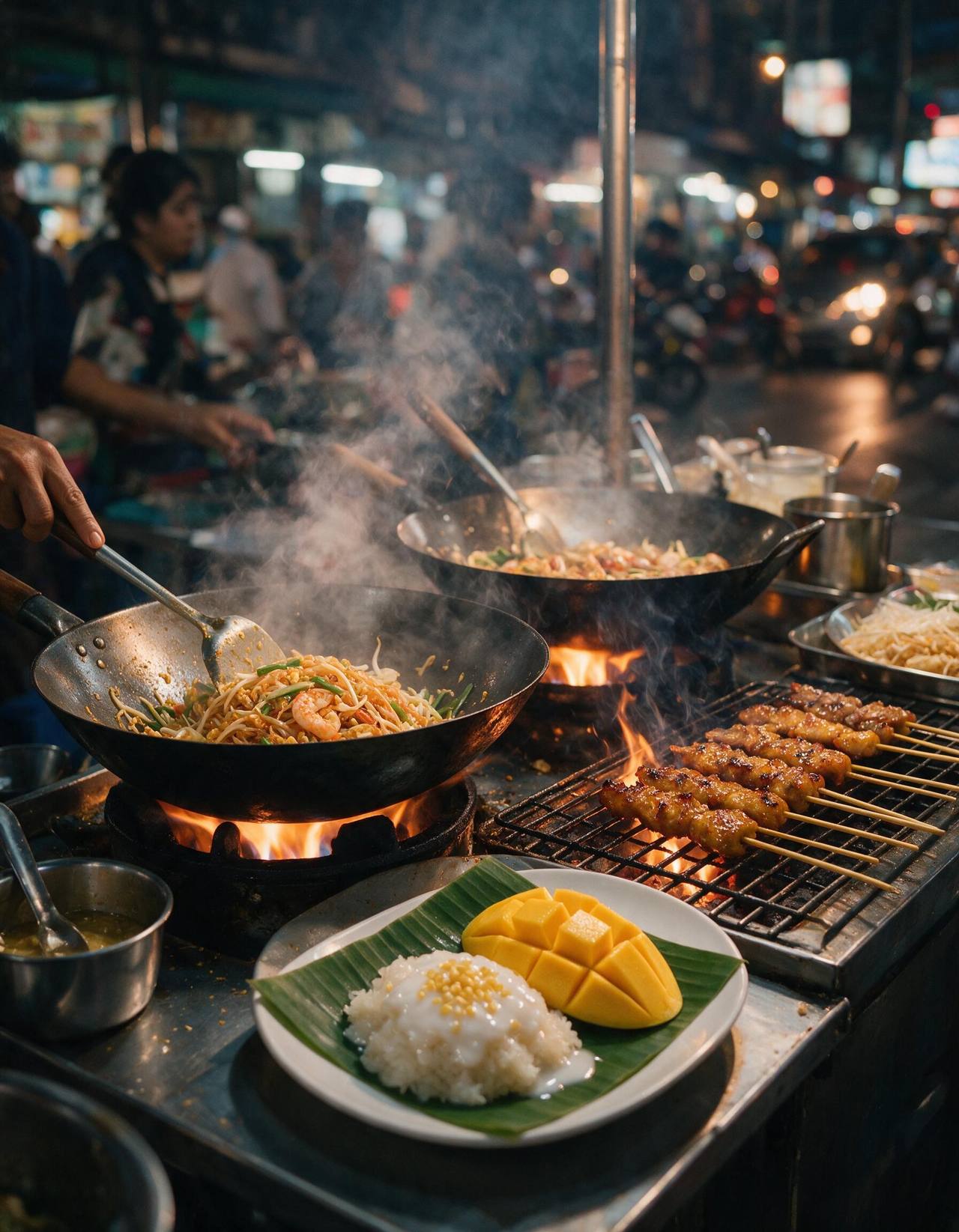
Gai Yang, charcoal-grilled chicken, is the street food king of Isan, the northeastern region of Thailand. This dish, characterised by its smoky charcoal flavour, caramelised marinade, and tender meat, is one of the most beloved foods in the country and is sold from carts and stalls everywhere from village markets to Bangkok street corners. The traditional Isan preparation involves butterflying the chicken, marinating it in a mixture of garlic, coriander root, fish sauce, and palm sugar, and grilling it slowly over charcoal. It is always served with khao niao (sticky rice) and som tum (green papaya salad), forming the holy trinity of Isan cuisine.
The Marinade: Simple Ingredients, Perfect Balance
What makes gai Yang exceptional is not complexity but balance. The marinade typically contains crushed garlic, coriander root (which has a deeper, more savoury flavour than the leaves), white peppercorns, fish sauce, and palm sugar. Some versions add oyster sauce or soy sauce for deeper colour and umami. The chicken is marinated for at least an hour, preferably overnight, then flattened on the grill to ensure even cooking. The key technique is grilling over charcoal rather than gas, which imparts a smoky flavour that is impossible to replicate. The sugar in the marinade caramelises on the skin, creating a sweet-savoury crust that contrasts beautifully with the tender meat inside.
The Isan Dining Experience
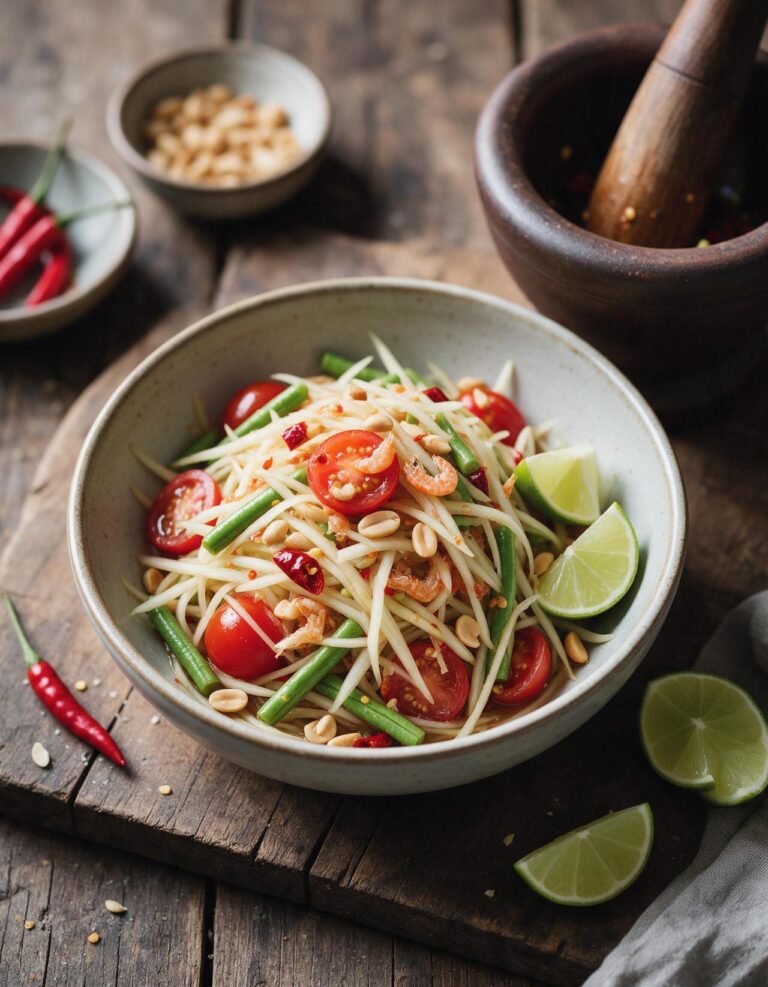
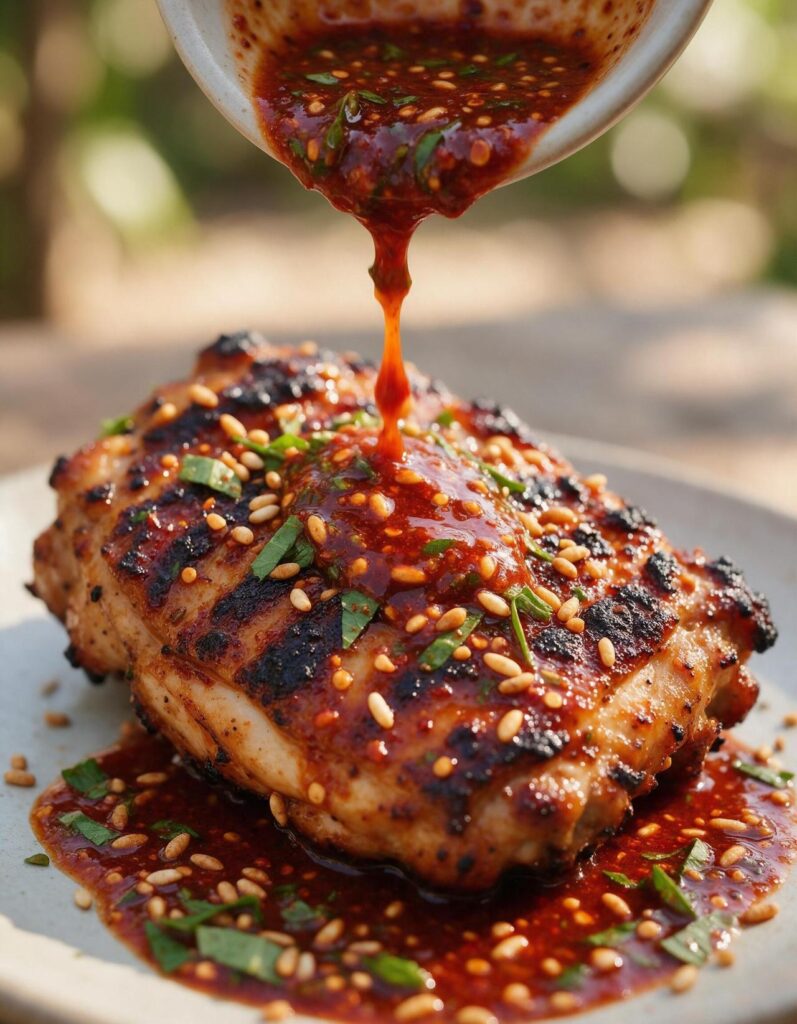
Eating gai yang is a communal experience that goes beyond the food itself. The chicken is served whole or in pieces, and diners tear off pieces with their right hand, dip them in the accompanying jaew sauce (a spicy, tangy dipping sauce made from dried chillies, toasted rice powder, fish sauce, and lime), and eat them with balls of sticky rice. The som tum provides a crunchy, spicy, sour counterpoint. This combination of grilled meat, sticky rice, and papaya salad is the quintessential Isan meal, eaten on mats on the floor, shared with family and friends, often accompanied by ice-cold beer or the local rice whisky, lao lao. It is a cuisine of the fields and the market, simple in technique but profound in flavour.
Practical Tips for Visitors
- Where to eat: Look for street stalls with a charcoal grill and a line of locals. In Bangkok, try the stalls on Sukhumvit Soi 55 (Thong Lo) or the gai yang section of Or Tor Kor Market.
- Price: 60-120 THB ($1.70-$3.40 USD) for a quarter chicken with rice. A whole chicken costs 200-300 THB.
- How to order: Ask for ‘gai yang’ and specify how much you want. It is always served with sticky rice (khao niao). Ask for ‘jaew’ for the dipping sauce, and ‘som tum’ if you want the full Isan experience.
- Best time: Gai yang stalls open in the late morning and sell until evening. The chicken is freshest at lunchtime when turnover is highest.
- Accompaniments: Sticky rice and som tum are essential. Some stalls also serve larb (minced meat salad) and tam mak hoong (spicy papaya salad without the dried shrimp).
The jaew dipping sauce is what elevates gai yang from good grilled chicken to an unforgettable dish. Made from dried red chillies that are toasted and ground, fish sauce, lime juice, toasted sticky rice powder (which adds a nutty thickness), and sometimes shallots and spring onions, it is a condiment that embodies the Isan flavour profile: spicy, sour, salty, and nutty. Each stall has its own version, and connoisseurs will tell you that the quality of the jaew is as important as the chicken itself. If you find a stall with exceptional jaew, you have found a keeper.
Gai yang has spread far beyond Isan and can now be found throughout Thailand and in Thai restaurants worldwide, but the best versions are still found at charcoal-fired street stalls in the northeast. The smoke from the charcoal, the freshness of the coriander root, and the quality of the free-range chicken (gai baan, or village chicken, which has a firmer texture and more flavour than factory-farmed birds) make all the difference. In Isan, many families raise their own chickens, and the gai yang sold at village markets comes from birds that have spent their lives foraging in the rice paddies. This is free-range, organic chicken prepared by people who have been cooking it their entire lives.
For those who want to recreate gai yang at home, the recipe is deceptively simple. Butterfly a whole chicken or use bone-in thighs. Crush garlic, coriander root, and white peppercorns in a mortar and pestle, mix with fish sauce and palm sugar, and marinate the chicken for at least 4 hours. Grill over charcoal if possible, or under a broiler if not, basting with the leftover marinade. The essential accompaniments are sticky rice (which requires soaking and steaming in a bamboo basket) and som tum (which requires a mortar and pestle and green papaya). Making the full Isan meal at home is a labour of love, but it is one of the most satisfying Thai cooking projects you can undertake.