Phi Ta Khon Ghost Festival: Thailand’s Most Bizarre and Colourful Celebration
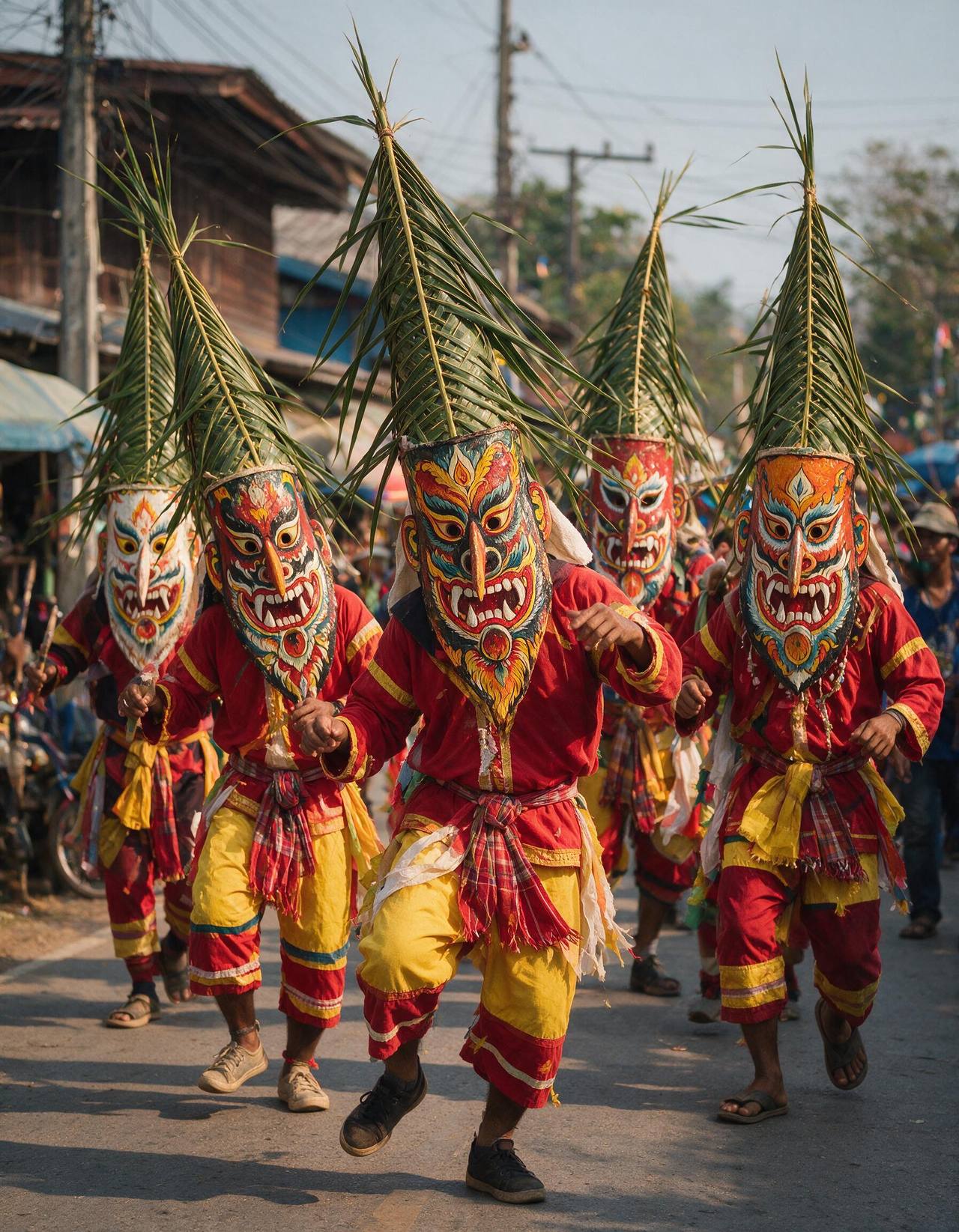
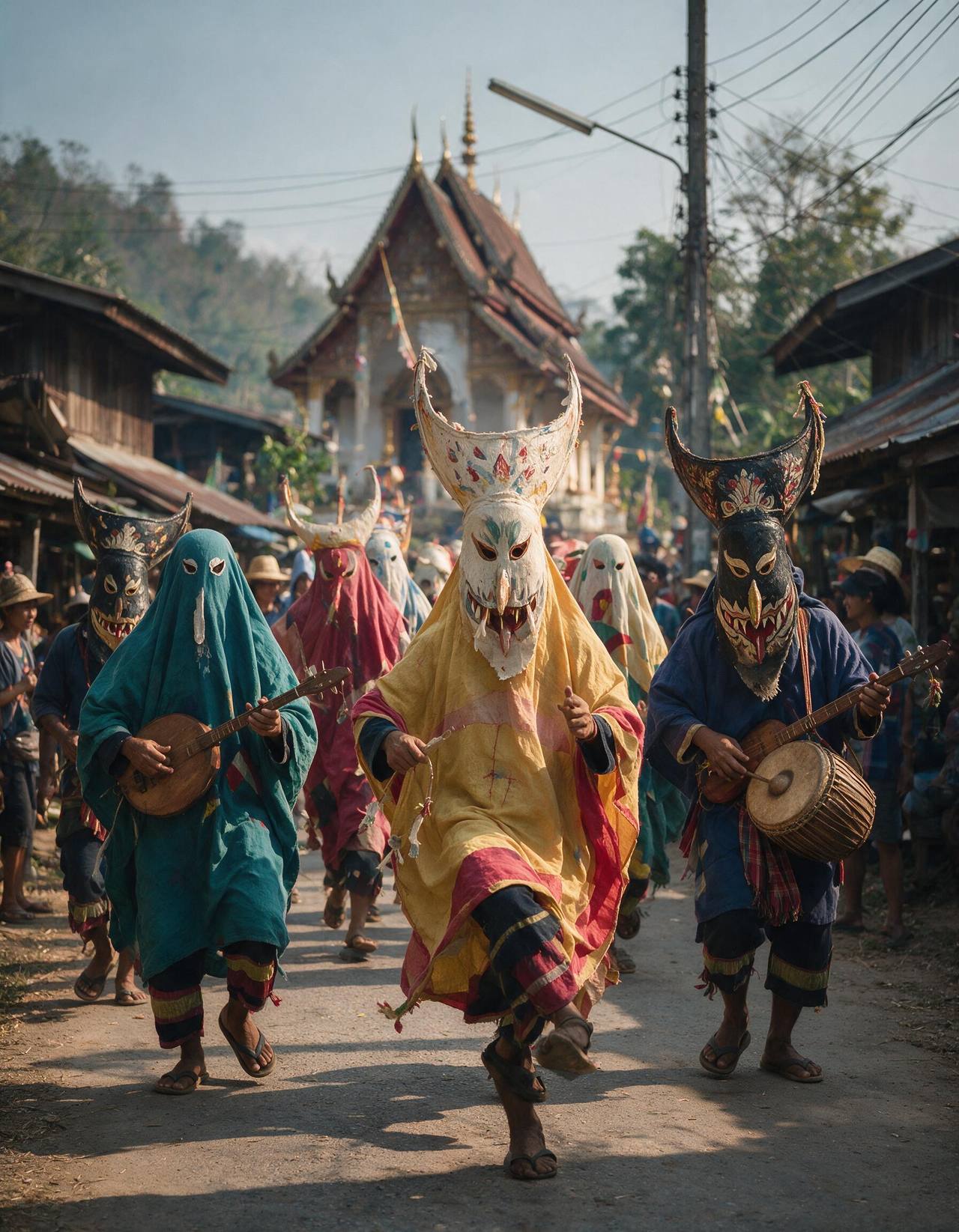
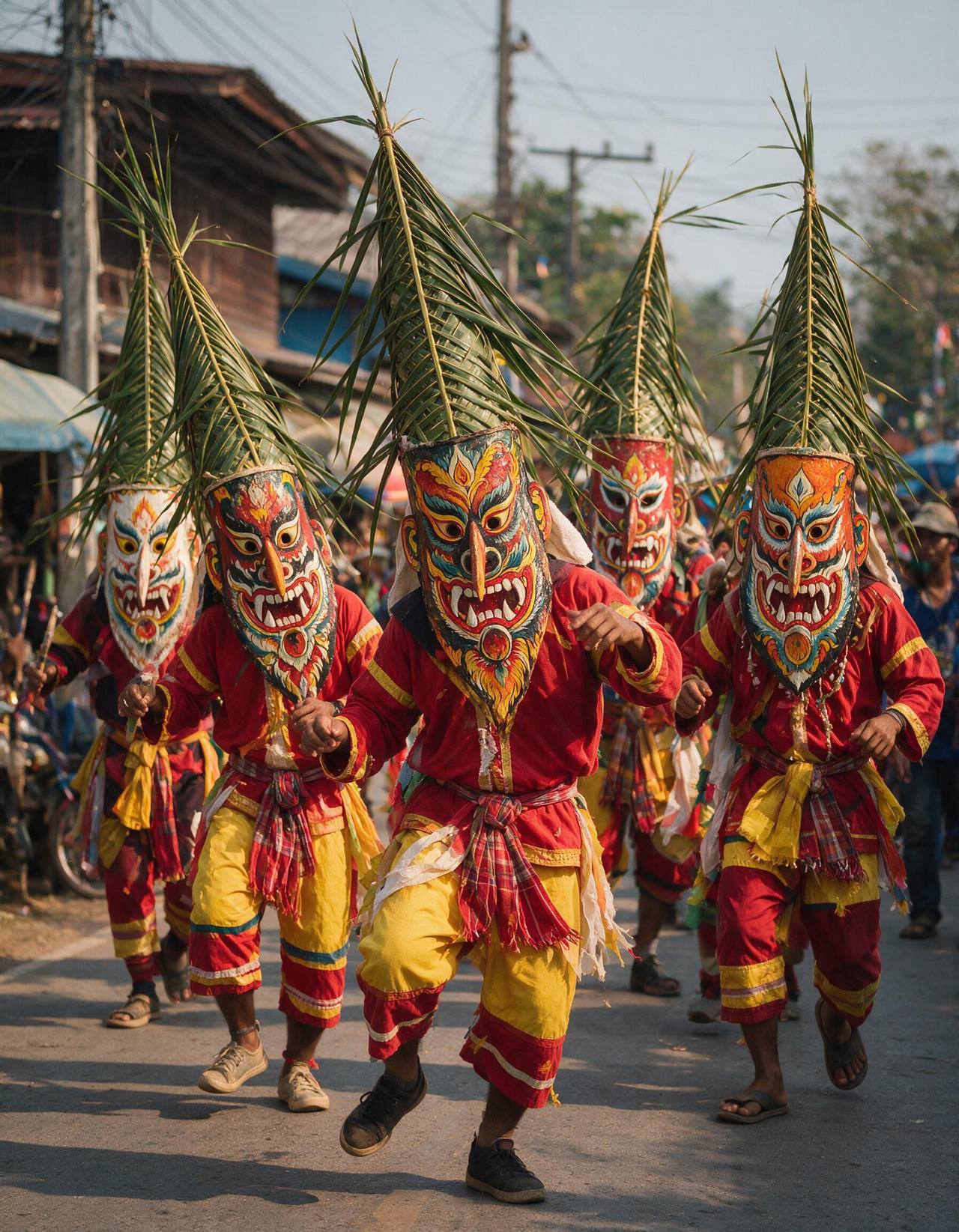
Deep in the Isaan region of northeastern Thailand, in the small district of Dan Sai, Loei Province, one of the world’s strangest and most colourful festivals takes place each year. Phi Ta Khon — literally “Ghost Festival” — sees locals donning enormous, hand-painted ghost masks and parading through the streets in a three-day celebration that blends Buddhist tradition, animist beliefs, and pure communal joy.
What Is Phi Ta Khon?
Phi Ta Khon is part of a larger three-day Buddhist celebration called Bun Luang, which combines the Boon Phra Wet merit-making ceremony with the ghost parade itself. The festival commemorates the story of Prince Vessantara — the Buddha’s penultimate incarnation — whose return from exile was said to be so joyous that even the dead spirits of the forest emerged to welcome him.
The festival takes place over three days, typically in June or July. The exact dates are not fixed on the Western calendar — they are determined each year by local spiritual leaders and the lunar calendar, usually announced only a few weeks in advance.
The Three Days of Phi Ta Khon
Day 1: Phi Ta Khon Dai (Small Ghost Festival)
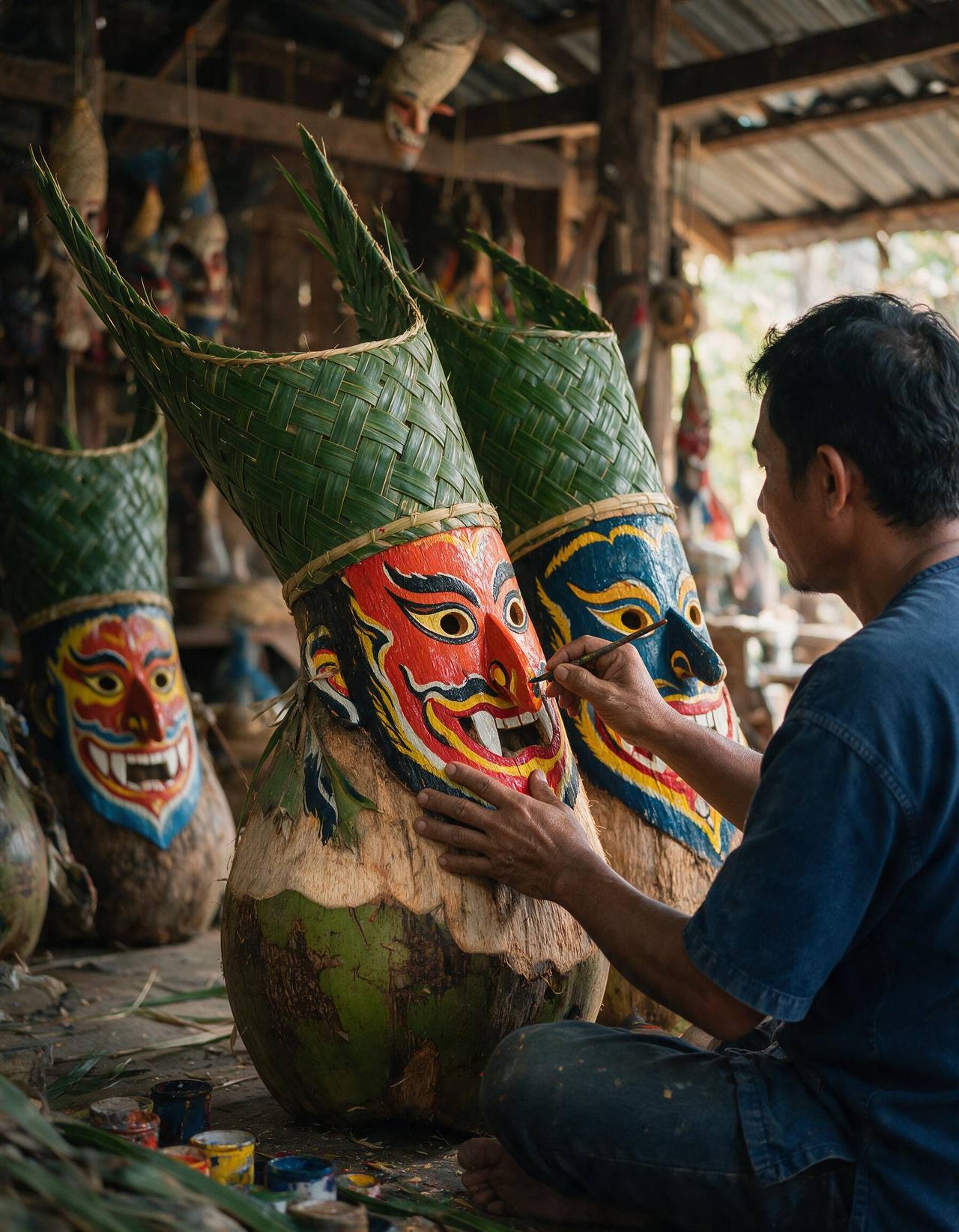
The first day features the “small ghosts” — typically children and young men who don the masks earlier in the day. The masks are made from coconut stalks carved into faces, painted with bright colours, and topped with tall pointed hats made from folded coconut palm leaves. Participants dance through the streets of Dan Sai, taunting spectators and each other, accompanied by traditional music from drums and cymbals.
Day 2: Phi Ta Khon Yai (Big Ghost Festival)
The main event. Adult men wear the full-sized ghost masks — some over 1.5 metres tall including the hat. The parade is longer, louder, and more elaborate. Participants carry phallic symbols (a fertility element rooted in animist tradition), and the atmosphere is raucous and joyful. This is the day for photography and immersion.
Day 3: Boon Phra Wet
The final day is the Buddhist ceremony itself. Monks chant sermons about Prince Vessantara at Wat Phon Chai, the main temple of Dan Sai. Thirteen Buddha images are paraded around the temple, and locals make merit. This is the most solemn day, though still filled with community celebration.
The Ghost Masks: A Dying Art
The masks are the heart of the festival. Each one is handmade and unique, carved from the base of a coconut tree trunk. The face is painted with exaggerated features — wide eyes, large teeth, sometimes a mischievous grin. The tall hat (called the ngop) is woven from coconut palm leaves and can reach over a metre in height.
Unfortunately, the art of mask-making is declining. Fewer young people are learning the craft, and the master mask-makers are aging. If you visit, you can buy masks as souvenirs — this supports the local artisans and helps keep the tradition alive. Prices range from 300-1,500 THB ($8.50-$43 USD) depending on size and detail.
Practical Information for Visitors
- Location: Dan Sai District, Loei Province, northeastern Thailand (Isaan region).
- When: Typically late June or early July. Dates are announced 4-8 weeks in advance. Check the Tourism Authority of Thailand (TAT) website or local Loei news.
- Getting there: The nearest major city is Loei town. Buses run from Bangkok’s Mo Chit bus terminal to Loei (7-8 hours, 400-600 THB / $11-$17 USD). From Loei, take a local bus or songthaew to Dan Sai (1.5 hours, about 60 THB / $1.70 USD). Alternatively, fly to Loei Airport (1 hour flight from Bangkok, about 2,000-3,500 THB / $57-$100 USD).
- Where to stay: Dan Sai has very limited accommodation. Options include:
- Homestays with local families (500-800 THB / $14-$23 USD per night, including meals). Book through local tourism offices.
- Wat Phon Chai temple stay (donation-based, very basic).
- Hotels in Loei town (30 km away, 600-1,500 THB / $17-$43 USD per night) and commute.
- What to wear: Light, comfortable clothing. You will be outdoors in the heat. A hat and sunscreen are essential. If you want to join the parade, many locals rent or sell masks — just ask around.
- What to bring: Cash (no ATMs in Dan Sai that accept foreign cards reliably), a camera, a refillable water bottle, and an open mind.
- Food: Street food stalls line the parade route. Expect northeastern Thai food — som tam, gai yang, larb, khao niao (sticky rice). Very affordable, 30-80 THB ($0.85-$2.30 USD) per dish.
Tips for the Best Experience
- Arrive early: Book your homestay or hotel at least a month in advance. Dan Sai is a small town and accommodation sells out fast once dates are announced.
- Respect the masks: The masks are sacred to the community. Do not touch them without permission, and do not wear one unless invited or you have purchased/rented your own.
- Be prepared for the phallic symbols: The festival includes large wooden phalluses carried in the parade. This is a serious fertility tradition, not a joke — do not mock or make crude comments.
- Join in: The locals are incredibly welcoming. If you show interest and respect, they will invite you to dance, try on a mask, and share their food and rice whiskey (lao lao).
- Photography: Ask before taking close-up photos of individuals. Most people are happy to be photographed, but a smile and a thumbs-up go a long way.
- Bring a gift: If you stay with a homestay family, bringing a small gift from your home country is a lovely gesture. Thai people are generous hosts and will appreciate the thought.
Why You Should Go
Phi Ta Khon is the kind of festival that challenges everything you think you know about Thailand. It is not on any standard tourist itinerary. There are no luxury resorts, no English-speaking guides, no air-conditioned buses. What there is, is one of the most authentic, joyful, and visually stunning cultural celebrations you will ever witness. If you want to see the real Thailand — the Thailand of small villages, ancient traditions, and communities that come together in celebration — this is it.